
Research & Sources
Mithril
The Metal That Saved Middle-earth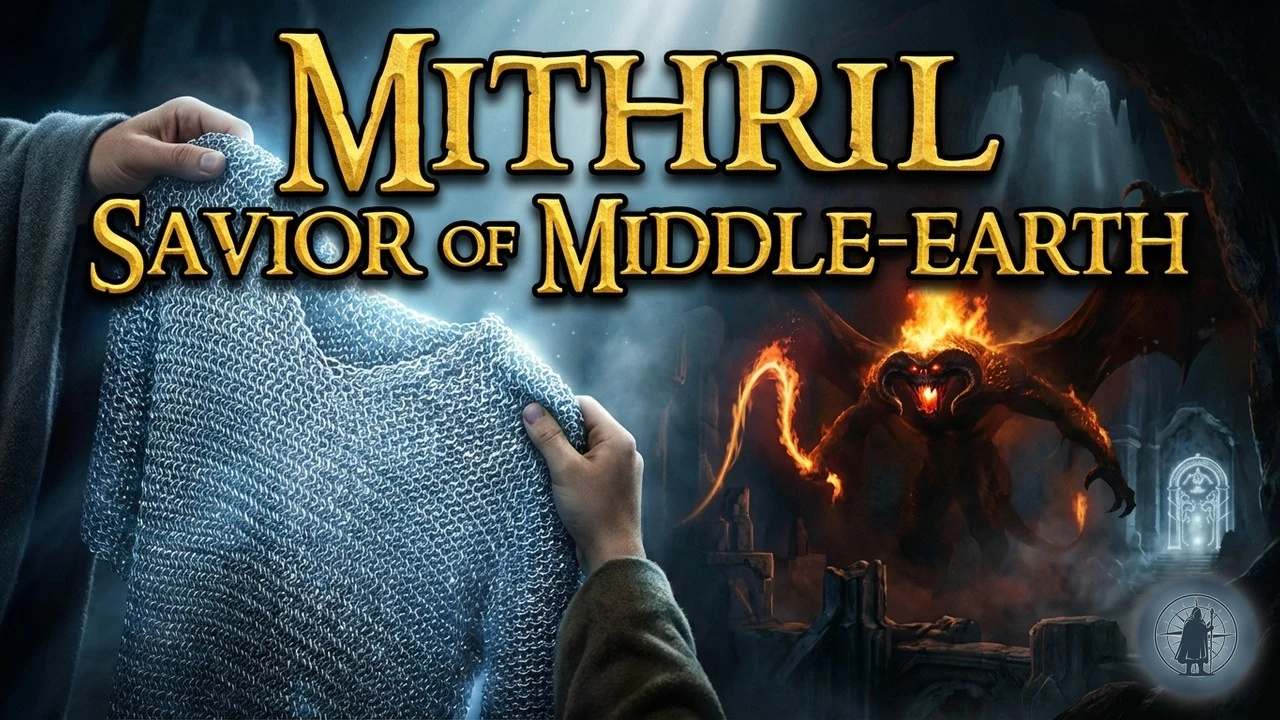 Watch the episode
Mithril: The Metal That Saved Middle-earth | Tolkien Lore Explained
Watch the episode
Mithril: The Metal That Saved Middle-earth | Tolkien Lore Explained
Research Notes: The Value of Mithril
Overview
Mithril is the only mineral that Tolkien invented for Middle-earth (per scholar Charles A. Huttar), and it occupies a unique position in the legendarium as both a literal substance and a potent symbol. Its story weaves together Dwarven ambition, Elvish artistry, the corruption of greed, and the quiet resilience of hobbits. Worth ten times its weight in gold when actively mined, and "beyond price" by the time of the War of the Ring, mithril connects some of the most significant events in Middle-earth's history: the founding of the great Dwarf-Elf friendship in Eregion, the forging of the Rings of Power, the fall of Khazad-dum, and ultimately, Frodo's survival on the road to Mordor.
Primary Sources
The Lord of the Rings
"A Journey in the Dark" (The Fellowship of the Ring, Book II, Chapter 4)
This is the primary exposition chapter for mithril. Gandalf delivers the key passage while the Fellowship passes through Moria:
"The wealth of Moria was not in gold and jewels, the toys of the Dwarves; nor in iron, their servant. Such things they found here, it is true, especially iron; but they did not need to delve for them: all things that they desired they could obtain in traffic. For here alone in the world was found Moria-silver, or true-silver as some have called it: mithril is the Elvish name. The Dwarves have a name which they do not tell. Its worth was ten times that of gold, and now it is beyond price; for little is left above ground, and even the Orcs dare not delve here for it." (FotR, "A Journey in the Dark")
Gandalf continues with the crucial thematic statement:
"The Dwarves tell no tale; but even as mithril was the foundation of their wealth, so also it was their destruction: they delved too greedily and too deep, and disturbed that from which they fled, Durin's Bane." (FotR, "A Journey in the Dark")
Gandalf also reveals the coat's staggering value:
"I never told him, but its worth was greater than the value of the whole Shire and everything in it." (FotR, "A Journey in the Dark")
Physical properties are described: "It could be beaten like copper, and polished like glass; and the Dwarves could make of it a metal, light and yet harder than tempered steel. Its beauty was like to that of common silver, but the beauty of mithril did not tarnish or grow dim." (FotR, "A Journey in the Dark")
"The Bridge of Khazad-dum" and "Many Meetings" (FotR)
Gimli's reaction to seeing the mithril coat on Frodo: "And all the arrows of all the hunters in the world would be in vain. It is a mithril-coat. Mithril! I have never seen or heard tell of one so fair. Is this the coat that Gandalf spoke of? Then he undervalued it. But it was well given." (FotR, "Many Meetings" / "The Ring Goes South")
"The Black Gate Opens" (The Return of the King, Book V, Chapter 10)
The Mouth of Sauron displays the mithril coat, along with Sam's sword and Frodo's cloak, as "evidence" of the hobbit's capture. This scene weaponizes the coat -- an object of beauty and protection becomes an instrument of psychological warfare.
"The Scouring of the Shire" (RotK, Book VI, Chapter 8)
The mithril coat saves Frodo one final time when Saruman attempts to stab him. The blade breaks against the hidden armor, revealing Frodo's secret protection.
Appendix A: "Durin's Folk"
Provides the historical timeline of mithril mining and the fall of Khazad-dum. The majority of the wealth of Durin's Folk was based on their hoards of mithril. In T.A. 1980, the Dwarves' relentless mining awakened Durin's Bane, killing Durin VI. His son Nain I was slain in 1981, and the kingdom was abandoned.
The Hobbit
In the original 1937 edition, Bilbo's mail was described as "silvered steel." It was revised to mithril in the 1966 edition, retroactively connecting The Hobbit to the deeper mythology. The coat was made "for a young elf-prince long ago" and found in Smaug's hoard. Thorin Oakenshield gave it to Bilbo as a "kingly gift."
The Silmarillion
References to the Noldor settling in Eregion specifically because mithril had been discovered in nearby Khazad-dum. The friendship between Celebrimbor's Elven-smiths and the Dwarves of Moria was "the closest that there has ever been between the two races." This friendship produced the Doors of Durin (Celebrimbor and the Dwarf-smith Narvi working together) and, critically, enabled the forging of the Rings of Power.
Nenya, one of the Three Elven Rings, was made of mithril -- the Ring of Water, given to Galadriel.
Unfinished Tales
Contains the reference to mithril being found in Numenor. The fifteenth King of Numenor, Tar-Telemmaite ("Silver-handed"), had a love of mithril and "bade his servants to seek ever for" the rare metal. His very kingly name was a reference to his obsession with it -- a cautionary parallel to the Dwarves' later obsession.
Appendix B / Historical Context
After the Downfall of Numenor (S.A. 3319) and the removal of Aman from the physical world, Moria became the sole remaining source of mithril in Middle-earth.
Key Facts & Timeline
- Years of the Trees: Durin I awakens at Mount Gundabad, eventually founds Khazad-dum beneath the Misty Mountains. Mithril deposits discovered. - Second Age, c. 750: Noldor under Celebrimbor settle in Eregion, drawn specifically by mithril. Friendship with Dwarves of Khazad-dum established. - S.A. c. 1500-1590: Rings of Power forged in Eregion. Nenya made of mithril. Trade between Elves and Dwarves at its peak. - S.A. 1697: Sauron destroys Eregion. The Dwarf-Elf trade relationship ends. - S.A. 3319: Downfall of Numenor. Mithril deposits on the island lost forever. Moria becomes the sole source. - T.A. 1980: Dwarves mine too deep, awaken Durin's Bane (a Balrog). Durin VI slain. - T.A. 1981: Nain I slain. Khazad-dum abandoned. No new mithril can be mined. Existing mithril becomes "beyond price." - T.A. 1999: Thrain I founds Erebor as new Dwarven capital. - T.A. 2941: Quest of Erebor. Bilbo receives the mithril coat from Thorin, originally from Smaug's hoard. - T.A. 3018: Bilbo gives the coat to Frodo in Rivendell. - T.A. 3019: Coat saves Frodo in Moria (orc spear), on the Anduin (arrow), is taken at Cirith Ungol, displayed by the Mouth of Sauron at the Black Gate, recovered by Gandalf, and saves Frodo once more from Saruman's blade in the Shire. - Fourth Age: Durin VII eventually leads Dwarves back to Khazad-dum; the ancient kingdom is restored.
Significant Characters
- Durin I: Founder of Khazad-dum, where mithril was first discovered - Celebrimbor: Greatest Elven-smith of the Second Age; settled in Eregion for access to mithril; made Nenya from mithril; crafted the ithildin inscriptions on the Doors of Durin with Narvi - Narvi: Dwarf-smith who built the Doors of Durin with Celebrimbor, symbolizing the Elf-Dwarf cooperation mithril enabled - Tar-Telemmaite: 15th King of Numenor, obsessed with mithril, his name meaning "Silver-handed" - Durin VI: King of Khazad-dum, slain by the Balrog awakened through mithril mining (T.A. 1980) - Thorin Oakenshield: Gave the mithril coat to Bilbo -- described as a "kingly gift" by Gimli - Bilbo Baggins: Received the coat from Thorin; later gave it to Frodo - Frodo Baggins: Wore the coat throughout the quest; it saved his life multiple times - Gimli: His reaction to the coat reveals Dwarven appreciation for beauty beyond mere acquisitiveness; later exemplifies the proper relationship with precious things in his work at the Glittering Caves - Gandalf: Reveals the coat's value; recovers it from the Mouth of Sauron - Galadriel: Bears Nenya, the Ring of Adamant, made of mithril - Shagrat: The orc captain who seized the coat from Frodo at Cirith Ungol, sparking a deadly fight among the orcs over its value - The Mouth of Sauron: Displays the coat as psychological warfare at the Black Gate
Geographic Locations
- Khazad-dum (Moria): The primary and eventually sole source of mithril in Middle-earth. Located beneath the Misty Mountains, with veins running north toward Caradhras. The name "Moria-silver" testifies to this association. - Caradhras (Redhorn): Mountain under which the mithril lode extended northward from Khazad-dum - Eregion (Hollin): Settled by Noldor expressly because of proximity to mithril. A high road ran from Ost-in-Edhil to Khazad-dum for trade. - Numenor: A secondary source of mithril, lost with the island's Downfall in S.A. 3319 - Aman/Valinor: Mithril was "probably" found in Aman as well, though references are suggestive rather than explicit. Lost to Middle-earth when the Straight Road was established. - Erebor (The Lonely Mountain): Where the mithril coat was found in Smaug's hoard - Minas Tirith: Guards of the Citadel wore mithril helms, "heirlooms from the glory of old days"
Themes & Symbolism
Greed and Consequence
Mithril embodies the paradox that beauty can drive destruction. "Even as mithril was the foundation of their wealth, so also it was their destruction." The Dwarves' story parallels the tale of the Silmarils -- treasures of surpassing beauty that become catalysts for catastrophe when pursued obsessively.Hidden Worth
The mithril coat is hidden beneath Frodo's clothes -- its protection invisible. Gandalf kept its true value secret even from Bilbo. This mirrors Tolkien's broader theme of hidden strength in humble things: the hobbits themselves, who appear insignificant but prove vital.Gift-Giving vs. Hoarding
Thorin's gift of the coat to Bilbo represents the redemptive power of generosity. Gimli recognizes this: "It was well given." The coat moves through the story by being given freely (Thorin to Bilbo, Bilbo to Frodo), contrasting with Smaug's hoarding and the orcs fighting over it. The coat functions properly only when gifted, not seized.Beauty and Corruption
Scholar Charles A. Huttar writes that mithril represents "beauty and terror side by side" -- evil "inherent in the mineral treasures hidden in the womb of Earth." Mithril itself is not evil, but the desire for it can corrupt. This parallels the Ring, which is beautiful but dangerous.Environmental / Anti-Industrialist Reading
"Delved too greedily and too deep" resonates with Tolkien's broader critique of industrialization. The Dwarves' extractive mining -- digging beyond what is sustainable or safe -- parallels modern resource exploitation. Tolkien's childhood in industrial Birmingham and rural Sarehole informed this tension.Mithril as Marker of the "Good"
Notably, mithril is always associated with "good" characters and objects: Nenya (Galadriel's ring), the Elendilmir (Star of Arnor -- "a white star of Elvish crystal upon a fillet of mithril"), the Guards of the Citadel helms, and Frodo's coat. It appears in contexts of protection, beauty, and legitimate authority -- never as a weapon of domination.Scholarly Interpretations & Theories
- Charles A. Huttar: Mithril epitomizes avarice for the Dwarves, embodying "beauty and terror side by side." It is the only mineral Tolkien invented, making it uniquely significant in his world-building. - Metallurgist James Owen: Suggests mithril could be "an fcc metal like aluminium or nickel, or possibly a bcc metal like titanium," capable of forming "strong, stiff, tough alloys." Titanium is the most commonly cited real-world analogue due to its strength-to-weight ratio and corrosion resistance. - Medieval Alchemy Connection: Scholars note mithril echoes alchemical dreams of a "perfect metal" -- one combining all desirable properties. Tolkien's knowledge of medieval scholarship would have included awareness of alchemical traditions. - Economic Analysis (C.J. Lockett): Unlike Martin's Westeros, where economics drive political power, Middle-earth depicts wealth as "transcendent rather than transactional." Mithril serves narrative purposes beyond economics -- it represents beauty, craftsmanship, and the corrupting allure of material accumulation. - Sub-creation Theory (Stephen C. Winter): Gimli transcends typical dwarven avarice through appreciation of beauty over monetary value. Galadriel prophesies that gold "shall have no dominion" over him. His later work at the Glittering Caves exemplifies Tolkien's concept of "sub-creation" -- the proper use of craft to enhance rather than exploit. - Norse/Germanic Influence: Impenetrable armor in Norse mythology (Hervarar saga ok Heidreks) may have influenced Tolkien's mithril mail-coat. The dragon-hoard origin of the coat directly parallels Beowulf and the Sigurd/Fafnir cycle.
Contradictions & Different Versions
- The Hobbit Revisions: The 1937 first edition described Bilbo's mail as "silvered steel." Tolkien changed this to mithril in the 1966 revised edition, retroactively integrating the coat into the deeper mythology he had developed for LOTR. - Mithril in Aman/Numenor: The textual evidence for mithril existing outside Moria is somewhat inconsistent. Gandalf says in FOTR that mithril was found "here alone in the world" -- yet Unfinished Tales references mithril in Numenor, and it is "probably" in Aman. This can be reconciled: Gandalf may mean that by the late Third Age, Moria is the only remaining source in the accessible world, since Numenor is drowned and Aman is removed. - The Identity of the "Young Elf-Prince": The mithril coat was made "for a young elf-prince long ago," but Tolkien never identified this prince. This deliberate ambiguity has generated much speculation but no canonical answer. - Galvorn vs. Mithril: Eol the Dark Elf invented galvorn ("shining black"), another special metal in the First Age -- "as hard as the steel of the Dwarves" but jet-black and extremely malleable. Galvorn appears to have been lost with Eol's death. Unlike mithril (a natural mineral), galvorn was an invented alloy, reflecting a different relationship between smith and material.
Cultural & Linguistic Context
- Etymology: Mithril = Sindarin mith ("grey, light grey") + ril ("brilliance, glitter"). The name captures both its appearance and its allure. - Ithildin: A mithril-derived substance used by the Gwaith-i-Mirdain (Celebrimbor's smiths). Sindarin: Ithil ("moon") + tin/tin ("spark; star"). Visible only by moonlight or starlight -- a substance that reveals hidden beauty under specific conditions, much like mithril itself reveals hidden worth. - Moria-silver / True-silver: Common Westron names for mithril. "True-silver" suggests it is the platonic ideal of silver -- silver perfected. - "The Dwarves have a name which they do not tell": Reflects Tolkien's concept that Dwarves keep their true language (Khuzdul) secret. Even the name of their most precious resource is hidden from outsiders. - Tar-Telemmaite: "Silver-handed" in Quenya (telpe "silver" + maite "handed"). A king defined by his obsession with mithril.
Questions & Mysteries
- Who was the young elf-prince? The mithril coat's original owner remains unidentified. Was it made in the First Age? Second Age? By Dwarven or Elven smiths? - How did it end up in Smaug's hoard? The coat traveled from an unknown elf-prince to the treasure hoard of Erebor, which Smaug seized. Was it a gift from Elves to Dwarves? Plunder from some forgotten conflict? - Did Durin VII find more mithril? When Durin's Folk returned to Khazad-dum in the Fourth Age, did they resume mining? Was the Balrog's lair cleared? Did the mithril veins remain? - Could mithril resist the Ring? A fan theory suggests that the mithril coat may have provided some protection against the Ring's influence on Frodo, though there is no canonical evidence for this. - Orc economics: The fact that Shagrat and Gorbag's soldiers killed each other over the mithril coat suggests that even Orcs recognized and coveted its value. What does this tell us about Orc society and their concept of wealth?
Compelling Quotes for Narration
1. "Its worth was ten times that of gold, and now it is beyond price; for little is left above ground, and even the Orcs dare not delve here for it." -- Gandalf (FotR, "A Journey in the Dark") 2. "Even as mithril was the foundation of their wealth, so also it was their destruction: they delved too greedily and too deep, and disturbed that from which they fled, Durin's Bane." -- Gandalf (FotR, "A Journey in the Dark") 3. "I never told him, but its worth was greater than the value of the whole Shire and everything in it." -- Gandalf (FotR, "A Journey in the Dark") 4. "It could be beaten like copper, and polished like glass; and the Dwarves could make of it a metal, light and yet harder than tempered steel. Its beauty was like to that of common silver, but the beauty of mithril did not tarnish or grow dim." -- Narrator (FotR, "A Journey in the Dark") 5. "It is a mithril-coat. Mithril! I have never seen or heard tell of one so fair... But it was well given." -- Gimli (FotR) 6. "The wealth of Moria was not in gold and jewels, the toys of the Dwarves; nor in iron, their servant." -- Gandalf (FotR, "A Journey in the Dark")
Visual Elements to Highlight
1. The mithril vein in Moria's walls -- Gandalf's torchlight catching the silver streak in the dark stone as the Fellowship passes through 2. The coat revealed -- Frodo lifting his shirt after being struck by the orc spear, revealing gleaming mithril beneath ordinary hobbit clothes 3. The Doors of Durin -- Ithildin letters and designs gleaming in moonlight, a testament to Elf-Dwarf cooperation built on mithril trade 4. The Balrog rising -- The terrible consequence emerging from the deep places where Dwarves mined for mithril 5. Smaug's hoard -- The mithril coat among mountains of gold, a small object of surpassing worth hidden among lesser treasures 6. The Mouth of Sauron -- Holding up the coat at the Black Gate, turning a protective gift into an instrument of despair 7. Nenya on Galadriel's hand -- The ring of mithril, white and adamant, the artistic counterpart to the raw ore 8. Guards of the Citadel -- Mithril helms from ancient days, the last visible tokens of Numenorean heritage in Gondor
Discrete Analytical Themes
Theme 1: The Material Properties as World-Building
Core idea: Tolkien's precise physical description of mithril establishes it as something genuinely new in fantasy literature -- not just "magical metal" but a substance with specific metallurgical properties Evidence: - "It could be beaten like copper, and polished like glass; and the Dwarves could make of it a metal, light and yet harder than tempered steel" (FotR, "A Journey in the Dark") - "Its beauty was like to that of common silver, but the beauty of mithril did not tarnish or grow dim" (FotR) - Metallurgist James Owen's analysis that mithril's properties correspond to real metallurgical possibilities (fcc or bcc crystal structure) - Scholar Charles A. Huttar: mithril is the only mineral Tolkien invented - Ithildin as a mithril derivative with unique optical properties (visible only by moonlight/starlight) Distinction: This theme covers WHAT mithril IS as a substance, not what it means or what people do because of itTheme 2: The Geography of Scarcity
Core idea: Mithril's value is defined by progressive geographic loss -- each catastrophe removes a source until none remains accessible Evidence: - Originally found in at least three locations: Khazad-dum, Numenor, and probably Aman - Aman removed from the physical world after the Downfall of Numenor (S.A. 3319) - Numenor drowned in the same catastrophe - Moria abandoned after the Balrog awakens (T.A. 1980-1981) - "Now it is beyond price; for little is left above ground" (Gandalf, FotR) - Gandalf: "here alone in the world was found Moria-silver" -- by the Third Age, this is literally true Distinction: This theme is about SUPPLY AND LOCATION, the geological and historical facts that drive rarity, not about the greed those facts provokeTheme 3: The Engine of the Elf-Dwarf Golden Age
Core idea: Mithril was the economic foundation for the greatest period of Elf-Dwarf cooperation in history, enabling the creation of some of Middle-earth's most significant artifacts Evidence: - Noldor settled in Eregion specifically because mithril had been discovered nearby - "The friendship that grew up between the people of Durin and the Elven-smiths of Eregion was the closest that there has ever been between the two races" - A high road ran from Ost-in-Edhil to Khazad-dum for trade - Celebrimbor and Narvi built the Doors of Durin together, decorated with ithildin - Nenya, one of the Three Rings, was made of mithril by Celebrimbor - This same cooperation enabled Sauron (as Annatar) to infiltrate and corrupt the ring-making project Distinction: This theme is about COOPERATION AND CREATION -- the productive relationships mithril enabled, not the destructive greed it could also inspireTheme 4: "Delved Too Greedily and Too Deep" -- Desire as Self-Destruction
Core idea: The Dwarves' relationship with mithril embodies Tolkien's recurring warning that possessive desire for beautiful things destroys the possessor Evidence: - "Even as mithril was the foundation of their wealth, so also it was their destruction" (Gandalf, FotR) - Tar-Telemmaite of Numenor, literally named "Silver-handed," obsessed with mithril -- echoing Dwarven obsession in a human context - Huttar: mithril represents "beauty and terror side by side" and evil "inherent in the mineral treasures hidden in the womb of Earth" - The Silmaril parallel: beauty pursued beyond wisdom leads to ruin - Tolkien's environmental concerns -- industrial extraction destroying the natural world (informed by his childhood in Birmingham vs. Sarehole) Distinction: This theme is about the MORAL FAILURE of greed and its consequences, distinct from the cooperation mithril also enabledTheme 5: The Mithril Coat as Gift Economy
Core idea: The coat's journey through the story tracks a pattern of gift-giving that contrasts sharply with hoarding and seizure, revealing Tolkien's values about how precious things should move through the world Evidence: - Made "for a young elf-prince long ago" -- its first known purpose was as a gift or commission - Thorin gives it to Bilbo: Gimli calls it "a kingly gift" and says "it was well given" - Bilbo gives it to Frodo in Rivendell - Contrast: Smaug hoards it; orcs fight and kill each other over it; the Mouth of Sauron weaponizes it - "Its worth was greater than the value of the whole Shire" -- yet both Thorin and Bilbo gave it freely - Galadriel's prophecy about Gimli: gold "shall have no dominion" over him -- the proper dwarven relationship to precious things Distinction: This theme is about HOW the coat MOVES between characters and what that movement reveals about moral characterTheme 6: Hidden Strength Beneath Humble Appearance
Core idea: The mithril coat functions as a physical metaphor for hobbits themselves -- unassuming on the outside, extraordinary within Evidence: - Gandalf never told Bilbo the coat's true value -- "greater than the value of the whole Shire" - Frodo wears it hidden beneath his clothes; Bilbo tells him to keep it concealed - The coat saves Frodo's life at least three times: Moria (orc spear), the Anduin (arrow), and the Shire (Saruman's blade) - Each rescue surprises those who witness it -- the orc thought Frodo was an easy target, Saruman thought Frodo vulnerable - Parallels the hobbit theme: "This quest may be attempted by the weak with as much hope as the strong" (Elrond) Distinction: This theme is about CONCEALMENT AND REVELATION -- the gap between appearance and reality, not the coat's economic value or moral meaningTheme 7: The Precious and the Ring -- Mithril as Shadow Parallel
Core idea: Mithril and the One Ring are structural parallels -- both are objects of surpassing value that inspire obsessive desire, but they produce opposite outcomes depending on whether they are hoarded or shared Evidence: - Both are described as incomparably valuable and increasingly rare - Both inspire violent conflict (orcs killing each other over the coat; the Ring's entire history) - Both "protect" their bearers in different ways (coat physically; Ring through invisibility) - But the coat is always given freely; the Ring corrupts and must be seized or surrendered with great anguish - The coat saves life; the Ring extends life at the cost of the soul - Mithril is associated exclusively with "good" characters and institutions; the Ring corrupts all who bear it - C.J. Lockett: mithril foreshadows "the corrupting allure of material accumulation" but without the Ring's active malice Distinction: This theme is about the STRUCTURAL COMPARISON between two "precious" objects and what the contrast reveals about Tolkien's moral frameworkAdditional Notes
The Orc Fight at Cirith Ungol
One of the most revealing episodes about mithril's value: when the orcs of Cirith Ungol strip Frodo of his possessions, the discovery of the mithril coat triggers a violent brawl between the garrisons of Minas Morgul (Gorbag's company) and the Tower (Shagrat's company). Nearly all the orcs kill each other over it. Shagrat survives and brings the coat to Sauron. This episode demonstrates that mithril's value transcends culture -- even orcs recognize and covet it, and it drives them to self-destruction, just as it did the Dwarves.Textual Evolution
The fact that Tolkien retroactively changed "silvered steel" to mithril in The Hobbit's 1966 revision shows how important the concept became to him. What started as generic fantasy armor became a lynchpin connecting The Hobbit to the deeper mythology of the Silmarillion and LOTR.The Fourth Age Question
With Durin VII leading his people back to Khazad-dum, the possibility of renewed mithril mining opens up. But Tolkien never addresses whether the mithril veins were still accessible or whether the lesson of "too greedily and too deep" would be heeded. This is a compelling open question.Galvorn as Contrast
Eol's galvorn ("shining black") provides an interesting counterpoint -- another extraordinary metal, but one that died with its creator. Mithril endures across ages; galvorn is lost. This may suggest that natural minerals outlast individual craft secrets.Sources: The Value of Mithril
Primary Sources (Tolkien's Works)
The Lord of the Rings
- The Fellowship of the Ring, Book II, Chapter 4: "A Journey in the Dark" -- PRIMARY source for mithril exposition. Contains Gandalf's description of mithril's properties, value, and role in Moria's history. Most important single chapter for this topic. - The Fellowship of the Ring, Book II, Chapter 5: "The Bridge of Khazad-dum" -- Mithril coat saves Frodo from orc spear in the Chamber of Mazarbul. - The Fellowship of the Ring, Book II, Chapter 1: "Many Meetings" / Chapter 3: "The Ring Goes South" -- Gimli's reaction to the mithril coat; Bilbo gives coat to Frodo. - The Return of the King, Book V, Chapter 10: "The Black Gate Opens" -- Mouth of Sauron displays mithril coat. - The Return of the King, Book VI, Chapter 1: "The Tower of Cirith Ungol" -- Orcs fight over the mithril coat. - The Return of the King, Book VI, Chapter 8: "The Scouring of the Shire" -- Coat saves Frodo from Saruman's blade. - Appendix A: "Durin's Folk" -- Timeline of Khazad-dum, mithril mining, awakening of the Balrog.The Hobbit
- Chapter 13: "Not at Home" / Chapter 15-17 -- Thorin gives Bilbo the mithril coat from Smaug's hoard. Note: originally "silvered steel" in 1937 edition; revised to mithril in 1966.The Silmarillion
- "Of the Rings of Power and the Third Age" -- Noldor settling in Eregion for mithril; Elf-Dwarf friendship. - Historical context for Celebrimbor, the Rings of Power, and Nenya.Unfinished Tales of Numenor and Middle-earth
- "A Description of the Island of Numenor" / "The Line of Elros" -- Reference to mithril found in Numenor; Tar-Telemmaite's obsession.Secondary Sources (Web)
Most Useful
- Tolkien Gateway: Mithril - https://tolkiengateway.net/wiki/Mithril Comprehensive wiki article with detailed sourcing. Best single overview. (Note: blocked by 403 on WebFetch but search results provided key content)
- Tolkien Gateway: Mithril-coat - https://tolkiengateway.net/wiki/Mithril-coat Detailed history of the coat through all its appearances. Very thorough sourcing.
- Stephen C. Winter: "It Was Well Given!" - https://stephencwinter.com/2022/01/01/it-was-well-given-gimli-takes-delight-in-frodos-mithril-coat-and-in-thorin-oakenshields-giving/ Excellent analysis of gift-giving themes, Gimli's character, sub-creation philosophy. One of the best scholarly blog posts on the topic.
- C.J. Lockett: "What's that got to do with the price of mithril in Eregion?" - https://cjlockett.com/2014/02/10/whats-that-got-to-do-with-the-price-of-mithril-in-eregion/ Economic analysis of mithril's value in Middle-earth. Compares Tolkien's approach to wealth with George R.R. Martin's. Argues that wealth in Middle-earth is "transcendent rather than transactional."
- A Phuulish Fellow: "Tolkienian Economics Part I" - https://phuulishfellow.wordpress.com/2019/11/06/das-silmaril-tolkienian-economics-part-i-replies-to-elfonomics-and-jethro-elsden/ Academic-level analysis of economics in Middle-earth, including mithril's role as a store of value recognized even by Orcs.
Useful
- Tolkien Gateway: Ithildin - https://tolkiengateway.net/wiki/Ithildin Etymology and properties of the mithril-derived substance.
- Tolkien Gateway: Eregion - https://tolkiengateway.net/wiki/Eregion Context for the Elf-Dwarf trade relationship built on mithril.
- Tolkien Gateway: Galvorn - https://tolkiengateway.net/wiki/Galvorn Eol's black metal, useful for comparison with mithril.
- Tea with Tolkien: Celebrimbor Profile - https://www.teawithtolkien.com/blog/celebrimbor-profile Celebrimbor's connection to mithril and the Doors of Durin.
- Wikipedia: Mithril - https://en.wikipedia.org/wiki/Mithril General overview including scholarly citations (Charles A. Huttar, James Owen metallurgical analysis). Good for real-world parallels.
- Wikipedia: Environmentalism in The Lord of the Rings - https://en.wikipedia.org/wiki/Environmentalism_in_The_Lord_of_the_Rings Context for "delved too greedily and too deep" as environmental theme.
- LOTR Fandom Wiki: Mithril - https://lotr.fandom.com/wiki/Mithril General overview, useful for cross-referencing.
- LOTR Fandom Wiki: Guard of the Citadel - https://lotr.fandom.com/wiki/Guard_of_the_Citadel Details on mithril helms of the Guards of the Citadel.
Background / Supplementary
- Tolkien Gateway: Letter 131 - https://tolkiengateway.net/wiki/Letter_131 Context for Tolkien's views on power and "the Machine."
- Tolkien Gateway: Durin's Folk - https://tolkiengateway.net/wiki/Durin's_Folk Timeline and history of the Longbeard Dwarves.
- Tolkien Gateway: Doors of Durin - https://tolkiengateway.net/wiki/Doors_of_Durin The ithildin-decorated doors as symbol of cooperation.
- Tumblr: tolkienmatters (Gandalf mithril quote) - https://www.tumblr.com/tolkienmatters/186996375632/ Full text of Gandalf's mithril exposition passage.
Scholarly References (Cited in Sources)
- Charles A. Huttar: Scholar of English literature; wrote that mithril epitomizes avarice, representing "beauty and terror side by side." Noted that mithril is the only mineral Tolkien invented. (Cited via Wikipedia article on Mithril) - James Owen: Metallurgist who analyzed mithril's plausible real-world crystal structure. (Cited via Wikipedia) - Hervarar saga ok Heidreks: Norse saga containing impenetrable armor that may have influenced Tolkien's mithril mail-coat concept. (Referenced in Wikipedia Mithril article)