Research & Sources
Werewolves of Middle-earth
Morgoth's Wolf-Demons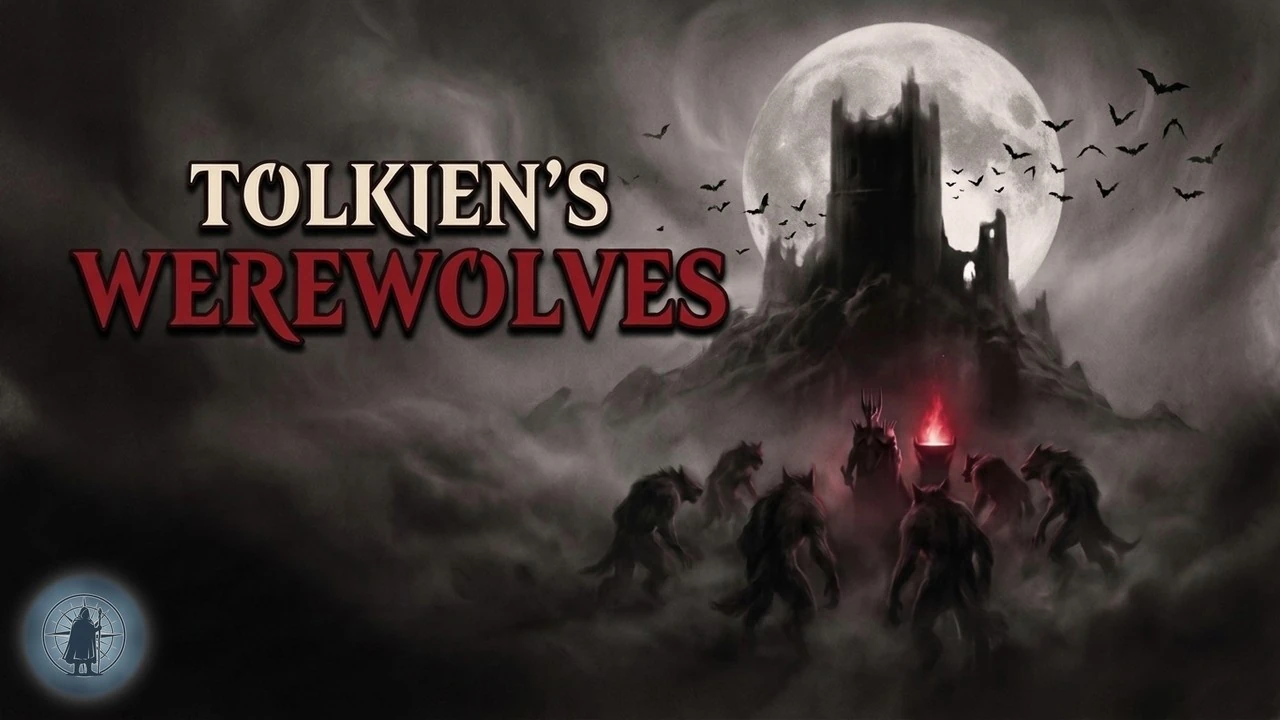 Watch the episode
Werewolves of Middle-earth: Morgoth's Wolf-Demons
Research Notes: Werewolves of Middle-earth — Morgoth's Wolf-Demons Explained
Read-first caveats for the writer - Tolkien Gateway, Fandom and several scholarly sites returned 403/402 to the research tool, so every Silmarillion quote below was taken from the verbatim text of Silmarillion ch. 19 ("Of Beren and Lúthien") (a classroom PDF reproduction), not from a wiki paraphrase. These are marked [S19 verbatim]. Lay of Leithian lines and Lost Tales details came through secondary sites and are marked [Lay, via secondary quotation; verify line wording] or [LT, secondary]. Cite chapter, not page: page numbers differ by edition (one secondary source gives S 174-178, another S 205-219 for the same scenes). - Material is thick on Beren-and-Lúthien and Carcharoth, thin on "werewolves as a race." The Silmarillion names exactly three individual werewolves (Draugluin, the unnamed wolf Finrod kills, Carcharoth) plus Sauron wearing the form. Anything about Draugluin being a Maia, werewolf breeding methods, or what became of werewolves after the First Age is inference, not canon. Said honestly, the topic supports 7 sections but only if the writer leans on the Hunting-of-the-Wolf narrative and the wargs contrast. - The planning hook says werewolves were "ended by a single hound." That is not what the text says (see Theme 8 and Contradictions). Huan kills Draugluin (strictly: Draugluin flees and dies at Sauron's feet), defeats Sauron's wolf-form (does not kill him), and kills Carcharoth. The race is never said to end; it simply vanishes from the record.
Overview
The werewolves of the First Age are not wolves that turned into something, and not men that turn into wolves. They are "fell beasts inhabited by dreadful spirits that he [Sauron] had imprisoned in their bodies" (S19). Wolf bodies, bred in the dark of Angband, with an evil spirit housed inside. The great ones are named: Draugluin, "lord and sire of the werewolves of Angband"; Carcharoth, the Red Maw, fed on living flesh by Morgoth's own hand; and Sauron himself, who in the Lay of Leithian is "Lord of Werewolves" and in the Silmarillion puts on the shape of "a werewolf, the mightiest that had yet walked the world." Against them stands one dog, Huan, Hound of Valinor, under a doom to die only when he meets "the mightiest wolf that would ever walk the world."
The whole lore sits inside one story, the Quest of the Silmaril (FA 465-466), and inside one man-and-elf love story that Tolkien called the Lay of Leithian ("Release from Bondage"). The werewolves are the physical machinery of that quest's menace: the pits of Tol-in-Gaurhoth, the disguise that gets Beren and Lúthien through Angband's gate, the gate-guard that costs Beren his hand, and the beast that carries a Silmaril into Doriath's sacred woods.
Primary Sources
The Silmarillion, Quenta Silmarillion ch. 19 "Of Beren and Lúthien" [S19 verbatim]
The definition (Sauron's army against Beren in Dorthonion):
"Therefore an army was sent against him under the command of Sauron; and Sauron brought werewolves, fell beasts inhabited by dreadful spirits that he had imprisoned in their bodies."
Note what is not said: the text does not say where the wolves come from, only what Sauron does to them. The imprisoning is Sauron's act.
Earlier trace (the trap for Gorlim, same chapter): "the light was blown out in the wind; wolves howled, and on his shoulders he felt suddenly the heavy hands of Sauron's hunters." (wolves as hunt-pack accessory, before the werewolf is named.)
The pit at Tol-in-Gaurhoth: Sauron "cast them therefore into a deep pit, dark and silent... From time to time they saw two eyes kindled in the dark, and a werewolf devoured one of the companions; but none betrayed their lord." (Finrod and Beren with Finrod's ten companions; one by one.)
Finrod's death: "But when the wolf came for Beren, Felagund put forth all his power, and burst his bonds; and he wrestled with the werewolf, and slew it with his hands and teeth; yet he himself was wounded to the death." He dies "in Tol-in-Gaurhoth, whose great tower he himself had built."
Huan introduced and doomed:
"Huan... was not born in Middle-earth, but came from the Blessed Realm; for Oromë had given him to Celegorm long ago in Valinor... Huan followed Celegorm into exile, and was faithful; and thus he too came under the doom of woe set upon the Noldor, and it was decreed that he should meet death, but not until he encountered the mightiest wolf that would ever walk the world."
"nothing could escape the sight and scent of Huan, nor could any enchantment stay him, and he slept not, neither by night nor day."
"he comprehended the speech of all things with voice; but it was permitted to him thrice only ere his death to speak with words."
Sauron's gambit on the bridge:
"Therefore he sent a wolf to the bridge. But Huan slew it silently. Still Sauron sent others one by one; and one by one Huan took them by the throat and slew them. Then Sauron sent Draugluin, a dread beast, old in evil, lord and sire of the werewolves of Angband. His might was great; and the battle of Huan and Draugluin was long and fierce. Yet at length Draugluin escaped, and fleeing back into the tower he died before Sauron's feet; and as he died he told his master: 'Huan is there!'"
"Now Sauron knew well, as did all in that land, the fate that was decreed for the hound of Valinor, and it came into his thought that he himself would accomplish it. Therefore he took upon himself the form of a werewolf, and made himself the mightiest that had yet walked the world; and he came forth to win the passage of the bridge. So great was the horror of his approach that Huan leaped aside. Then Sauron sprang upon Lúthien; and she swooned before the menace of the fell spirit in his eyes and the foul vapour of his breath."
"But no wizardry nor spell, neither fang nor venom, nor devil's art nor beast-strength, could overthrow Huan without forsaking his body utterly. Ere his foul spirit left its dark house, Lúthien came to him, and said that he should be stripped of his raiment of flesh, and his ghost be sent quaking back to Morgoth... 'unless thou yield to me the mastery of thy tower.' Then Sauron yielded himself... And immediately he took the form of a vampire, great as a dark cloud across the moon, and he fled, dripping blood from his throat upon the trees, and came to Taur-nu-Fuin, and dwelt there, filling it with horror."
The disguises:
"He turned aside therefore at Sauron's isle... and he [Huan] took thence the ghastly wolf-hame of Draugluin, and the bat-fell of Thuringwethil. She was the messenger of Sauron, and was wont to fly in vampire's form to Angband; and her great fingered wings were barbed at each joint's end with an iron claw."
"Beren became in all things like a werewolf to look upon, save that in his eyes there shone a spirit grim indeed but clean; and horror was in his glance as he saw upon his flank a bat-like creature clinging with creased wings."
(Huan's second speech, at the edge of Taur-nu-Fuin: "my heart forebodes that what you find at the Gate I shall myself see... it may be that our three paths lead back to Doriath, and we may meet before the end.")
Carcharoth's making:
"Then Morgoth recalled the doom of Huan, and he chose one from among the whelps of the race of Draugluin; and he fed him with his own hand upon living flesh, and put his power upon him. Swiftly the wolf grew, until he could creep into no den, but lay huge and hungry before the feet of Morgoth. There the fire and anguish of hell entered into him, and he became filled with a devouring spirit, tormented, terrible, and strong. Carcharoth, the Red Maw, he is named in the tales of those days, and Anfauglir, the Jaws of Thirst. And Morgoth set him to lie unsleeping before the doors of Angband, lest Huan come."
At the Gate: "for news had long been brought to Angband that Draugluin was dead. Therefore when they approached he denied them entry, and bade them stand; and he drew near with menace, scenting something strange in the air about them." Lúthien: "'O woe-begotten spirit, fall now into dark oblivion, and forget for a while the dreadful doom of life.' And Carcharoth was felled, as though lightning had smitten him."
The bite:
"Carcharoth had arisen from sleep, and stood now in wrath upon the threshold of Angband... Beren strode forth before her, and in his right hand he held aloft the Silmaril. Carcharoth halted, and for a moment was afraid. 'Get you gone, and fly!' cried Beren; 'for here is a fire that shall consume you, and all evil things.' ... But Carcharoth looked upon that holy jewel and was not daunted, and the devouring spirit within him awoke to sudden fire; and gaping he took suddenly the hand within his jaws, and he bit it off at the wrist. Then swiftly all his inwards were filled with a flame of anguish, and the Silmaril seared his accursed flesh."
"Of all the terrors that came ever into Beleriand ere Angband's fall the madness of Carcharoth was the most dreadful; for the power of the Silmaril was hidden within him." Beren swoons "for there was venom on the fangs of the wolf."
Into Doriath: "Nothing hindered him, and the might of Melian upon the borders of the land stayed him not; for fate drove him, and the power of the Silmaril that he bore to his torment."
The Hunting of the Wolf: party = Huan, Mablung of the Heavy Hand, Beleg Strongbow, Beren Erchamion, Thingol. Found "in a dark valley, down the northern side whereof Esgalduin fell in a torrent over steep falls. At the foot of the falls Carcharoth drank to ease his consuming thirst." He hides in a thicket; Huan goes in alone; Carcharoth bursts out, "leaped suddenly upon Thingol. Swiftly Beren strode before him with a spear, but Carcharoth swept it aside and felled him, biting at his breast." Then:
"no battle of wolf and hound has been like to it, for in the baying of Huan was heard the voice of the horns of Oromë and the wrath of the Valar, but in the howls of Carcharoth was the hate of Morgoth and malice crueller than teeth of steel... Huan in that hour slew Carcharoth; but there in the woven woods of Doriath his own doom long spoken was fulfilled, and he was wounded mortally, and the venom of Morgoth entered into him. Then he came, and falling beside Beren spoke for the third time with words; and he bade Beren farewell before he died. Beren spoke not, but laid his hand upon the head of the hound, and so they parted."
Mablung "ripped up the belly of the Wolf; and within he was well nigh all consumed as with a fire, but the hand of Beren that held the jewel was yet incorrupt. But when Mablung reached forth to touch it, the hand was no more, and the Silmaril lay there unveiled."
(Orc-riders note, same chapter: Huan lets Lúthien ride "in the fashion of a steed, even as the Orcs did at times upon great wolves." This is the First Age ancestor of the warg-rider.)
The Lay of Leithian (Lays of Beleriand, HoME III) [via secondary quotation; verify wording]
- Draugluin: "pale Draugluin, the old grey lord / of wolves and beasts of blood abhorred" (Canto X, ~ll.154-155, per a blog transcription). So Draugluin is pale/grey in the Lay, while the Sindarin name later glosses "blue wolf" (see Linguistic). - Sauron-as-wolf: "a shape long-haired, / dank with poison, with awful eyes / wolvish, ravenous" (~ll.169-171). - The shape-changing duel: "From shape to shape, from wolf to worm, / from monster to his own demon form" (~ll.204-205). In the poem Thû cycles wolf, serpent, monster, true form before the vampire flight; the prose Silmarillion compresses this to wolf then vampire. - Huan's invulnerability: "No wizardry, nor spell, nor dart, / nor fang, nor venom, nor devil's art" (~ll.209-210); the prose echoes this nearly word for word. - Huan's doom, as quoted from the Lay: he "should fall / before the mightiest wolf alone / that ever was whelped in cave or stone" (Valar Guild paraphrase of Lay; verify). Note the Lay phrasing "that ever was whelped" matches the Silmarillion "would ever walk the world" — the key to the loophole in Theme 6. - Werewolf-spirits: a line describes creatures "in wolvish form and flesh" held by "demon spirits dire" (Valar Guild / RealElvish citations of the Lay; I could not retrieve the exact couplet). This is the poetic source of the "spirit in a wolf-body" doctrine and the earliest statement of it. - Carcharoth in the Lay: "towered Carcharoth... his jaws were..." (Canto XIV; digitaltolkien index confirms the passage, Lays of Beleriand pp. 306-308 — full text not retrieved). The "wolf" is already fully the Wolf of Angband in the Lay (c. 1925-31).The Book of Lost Tales II, "The Tale of Tinúviel" (c. 1917) [secondary]
- The villain is Tevildo, Prince of Cats (Vardo Meoita), not Sauron. His thane Oikeroi is slain by Huan; Beren takes the skin (the ancestor of the Draugluin hame; here a cat skin sewn by Tinúviel: she teaches Beren "to sit and sprawl, to step and bound and trot in the semblance of a cat"). - Karkaras (later Carcharoth, "Knife-fang", also "Carcaras the Wolfward") already guards Angband's gate. So the gate-wolf pre-dates the werewolf doctrine: he is the one constant across all versions (LT2/68 per Eldamo). - Huan there is "Captain of the Dogs," chief foe of Tevildo.Other sources worth citing
- Letters: a phrase attributed in secondary sources to Tolkien's Hastings letter (Letter 153 draft, Sept 1954) calls Carcharoth "the Wolf-warden of the Gates of Hell." I could not confirm the letter number or exact sentence from a primary text; treat as unverified attribution and re-check against Letters (rev. ed.) before using. Letter 131 (to Waldman) is the Silmarillion summary but I did not find a werewolf passage in it. - The Hobbit ch. 6 "Out of the Frying-Pan into the Fire": Wargs hold council with goblins; "He spoke to them in the dreadful language of the Wargs. Gandalf understood it." (secondary quotation; verify). Later Beorn nails a warg-skin on a tree near his homestead. - FotR II.3 (Hollin): Gandalf to the pack-leader: "Listen, Hound of Sauron! Gandalf is here. Fly, if you value your foul skin!" (secondary). The leader is shot by Legolas. Valar Guild comments Gandalf's "Hound of Sauron" is probably "poetic liberty" since these wargs likely served Saruman (that reading is the site's, not Tolkien's). Note Hollin is the same stretch of country as Eregion. - Two Towers / Appendix: "wolves poured from Isengard"; Wolf-riders at the Fords of Isen and scouting the Westfold before Helm's Deep (secondary). - Appendix B: The Fell Winter (TA 2911) brings white wolves into Eriador across frozen rivers (from memory of the Appendix; verify the exact wording and date before use). - Tolkien's etymology of "warg" (secondary: Tom Shippey): Old Norse vargr "wolf" + Old English wearg "outlaw, criminal, accursed"; Shippey says the spelling "splits the difference." The Norse sense "strangler" is a derived gloss.Timeline
First Age dates are from the Annals of Beleriand as reproduced in Silmarillion ch. 18-19 and in earlier episode notes in this workspace; flagged where approximate.
- Before the Sun (undated): Morgoth's pits in Angband; Orcs and wolves of Angband bred. The Silmarillion does not narrate the origin of werewolves. - FA 455, Dagor Bragollach: Morgoth breaks the Siege; "wolves" are in the host (I did not retrieve exact text; verify). Sauron soon after takes Finrod's island tower on Tol Sirion in the Sirion and it becomes Tol-in-Gaurhoth, the Isle of Werewolves (separate episode covers this; keep to one beat). Date approx. FA 457 (verify). - FA 455-465: Barahir's band in Dorthonion; Gorlim's betrayal; Beren Erchamion survives alone; Sauron sent with "werewolves" against him; Beren flees Dorthonion in winter. - FA 465: Beren reaches Doriath; Thingol sets the Silmaril bride-price. Finrod and Beren with ten companions captured at Tol-in-Gaurhoth; "a werewolf devoured one of the companions" at intervals; Finrod dies killing a werewolf barehanded. - FA 465-466: Lúthien and Huan reach the isle. Huan kills wolves "one by one"; Draugluin dies; Sauron in wolf-form defeated; Lúthien takes the isle; Sauron flees as a vampire to Taur-nu-Fuin. - FA 466: Beren and Lúthien in Draugluin's hame and Thuringwethil's fell reach Angband; Carcharoth enchanted; the Silmaril cut; the hand bitten off; Carcharoth runs mad to Doriath; the Hunting of the Wolf; Huan and Carcharoth die; Beren dies (Silm.: Thingol receives the Silmaril; Beren's death at Lúthien's side). - FA 472: Nirnaeth Arnoediad — wolves and Orcs still in Morgoth's armies, but no named werewolf. - FA 587 (end of FA): War of Wrath. After this the word "werewolf" does not appear in the narrative. - TA 2911: Fell Winter; white wolves in Eriador (verify). - TA 2941: Wargs and goblins at the Misty Mountains (The Hobbit). - TA 3018-19: Hollin attack; Wolf-riders of Isengard.
Key Characters
Draugluin — "a dread beast, old in evil, lord and sire of the werewolves of Angband." Sindarin draug + luin ("blue wolf" per Encyclopedia of Arda; an older gloss "fear-phantom"). Pale/grey in the Lay. Dies at Sauron's feet after fighting Huan. His hame (pelt) is carried off by Huan and worn by Beren. The Silmarillion calls him "sire of the werewolves of Angband," not of all werewolves (Encyclopedia of Arda notes the phrase may mean only the Angband werewolves). Early-version counterpart: Oikeroi, cat-thane of Tevildo.
Carcharoth (the Red Maw, Anfauglir "Jaws of Thirst") — "whelp of the race of Draugluin," fed on living flesh by Morgoth, grown too big for any den, set sleepless at the Gate. Names: Karkaras/Carcaras (Lost Tales, "Knife-fang", "Wolfward"), Carcharas, Carcharoth; Borosaith (Everhungry) is also recorded. Eldamo analysis: carch "fang" + caran "red" + augmentative -oth, so "Great Red Fang" is more literal than "Red Maw."
Sauron / Thû / Gorthaur — "Lord of Werewolves" (title in Lay/Silm.; in LT Tevildo). Wears wolf-form, then vampire-form to escape. Defeated by Huan and Lúthien. Key detail: he is the cause of the doctrine ("imprisoned in their bodies").
Huan, Hound of Valinor — Oromë's gift to Celegorm. Sleepless, speaks three times only. Doom: death at the mightiest wolf. Dies in Doriath, FA 466, with Beren's hand on his head. (A Christopher Tolkien note, secondary, says Huan may have returned from Mandos with Beren in later drafts; verify in HoME V/Lost Road before using.)
Thuringwethil ("Woman of Secret Shadow") — "the messenger of Sauron... wont to fly in vampire's form to Angband." Never appears alive. Only her bat-fell does, worn by Lúthien. Sindarin thurin "secret" + gwath "shadow" + feminine -il/-wethil; Tolkien Gateway reads "Woman of Secret Shadow."
Finrod Felagund — builds the tower of Tol Sirion; kills a werewolf "with his hands and teeth," dying of it.
Beren Erchamion — wears wolf-hame; loses right hand to Carcharoth; wounded again in the Hunt.
Lúthien Tinúviel — addresses Carcharoth as "O woe-begotten spirit"; strips Sauron's flesh-raiment by threat.
Thingol, Mablung, Beleg Strongbow — the Hunting party. Mablung opens the wolf; Beleg is the same Beleg who dies in the Turin tale (here the epithet is Strongbow in the Silmarillion text, Cúthalion elsewhere).
Geography
- Angband / Thangorodrim: Morgoth's fortress; breeding ground. Gate: "an arch wide and dark at the foot of the mountain." Carcharoth lies "before the doors." The valley before the Gate has "Black chasms... forms as of writhing serpents... carrion fowl." - Tol-in-Gaurhoth: Sindarin Gaurhoth "werewolf host"; Isle in the Sirion; former Minas Tirith of Finrod. Pits, tower, a bridge Lúthien stands on. - Taur-nu-Fuin: "Forest under Night," the former Dorthonion. Sauron flees here as a vampire; Huan and Lúthien run through it clad in the dread hames. - Doriath, Neldoreth, Esgalduin falls: where the Hunting of the Wolf ends. The Girdle of Melian does not stop Carcharoth ("the might of Melian upon the borders of the land stayed him not"). - Dorthonion: Beren's outlaw land; where Sauron brings werewolves against him. - Distance/time: Angband to Doriath is a flight of "ravening" but the text gives no day count; Beren and Lúthien are carried by Thorondor and the eagles to Doriath's border while Carcharoth runs on his own.
Themes and Symbolism
1. Evil cannot create, only twist. Morgoth can neither make wolves nor souls; he feeds, grows and houses. The wolf is a natural creature "put under power." (Tolkien's consistent doctrine; in Letters and Morgoth's Ring.) The doctrine here: wolf-flesh + fell spirit = corruption of two good things (a creature and a spirit). 2. Hell imagery. "The fire and anguish of hell entered into him," "the Gate" (Hell-gate), "the doom of life" — Carcharoth is Tolkien's Cerberus/Fenrir hybrid at the hellgate. The phrase "Wolf-warden of the Gates of Hell" attributed to Tolkien is a short key to this (unverified citation). 3. Fenrir and Týr. Fenrir bites off Týr's hand at the wrist after the gods bind him; Carcharoth bites off Beren's at the wrist. Fenrir is fated to slay Odin and be slain; Huan is fated to die by the great wolf. Tolkien was a professional Norse scholar. Treat as widely noted scholarly parallel, not a Tolkien statement. 4. Holy fire vs. unclean flesh. A Silmaril, hallowed by Varda, burns evil flesh. Carcharoth is "was not daunted... the devouring spirit within him awoke to sudden fire." The hallowed thing destroys its devourer from inside: eucatastrophe in the form of pain. 5. The unclean disguise with a clean spirit. Beren wears the werewolf's skin with "a spirit grim indeed but clean." Flesh vs. spirit as moral locus. 6. The prophecy as grammar. Fate lives in the words ("mightiest that would ever walk the world"), not the intent; Sauron's attempt fails on a tense (had yet walked). 7. The hound as counter-image of Morgoth's wolf. Huan is a hound of Valinor (the Valar's own beast, Oromë's), the wolf a hound of Morgoth. Both are beasts with spirit; both speak (Huan three times; Carcharoth is addressed as a spirit).
Scholarly Perspectives
- Werewolf as folklore vs. Tolkien's usage. Folkloric werewolves (Old English wer "man" + wulf) are men who become wolves. Tolkien's are not: no man changes; a spirit inhabits a bred beast. Sauron's wolf-shape is closer to a Maia donning a body (cf. his later fair form Annatar). Note the difference carefully: the word "werewolf" is kept, the folkloric mechanism is replaced. (Interpretive point; no Tolkien statement found.) - Maiar speculation. RealElvish (fan scholarship) proposes Draugluin may have been "a weak Maia who clothed himself in the body of a huge wolf and interbred with wolves." The Silmarillion says nothing like it. Earlier workspace notes (Maia-death episode) flagged "Draugluin and Thuringwethil as Maiar" as fan speculation and told the writer to flag or cut. Keep it flagged. - Tom Shippey on warg: the word fuses ON vargr and OE wearg — wolf and outlaw. - Sources of the wolf-and-hound pairing. Lost Tales cat-and-dog (Tevildo vs Huan) is a children's-tale conflict; the Lay's revision to wolves and the Lay's werewolf doctrine deepen it into the Wolf of Hell vs. Hound of Heaven. "Hound of Heaven" is a Francis Thompson title; I found no Tolkien statement linking it, so avoid asserting the link. - John Garth/Shippey on the poem's "female-centred fairy-tale revisioning" (Garth, via Wikipedia summary of Beren and Lúthien, 2017): Lúthien commands the beasts, and it is her song and cloak not Beren's sword that fells Sauron and Carcharoth. Relevant to why the werewolves lose.
Contradictions and Variants
1. Cats to wolves. Lost Tales (1917): Tevildo Prince of Cats, Oikeroi; Karkaras is a wolf already. Lay (1925-31): Thû Lord of Werewolves, Draugluin. Silmarillion (1977, Christopher Tolkien edited): Sauron. The cat-lords did not vanish by design; Christopher's Beren and Lúthien (2017) retraces this. 2. Draugluin's colour/meaning. Lay "pale... grey"; Sindarin name later "blue wolf" (luin = "blue"). Earlier gloss "fear-phantom." 3. "Sire of the werewolves of Angband" vs. "first and father of all werewolves." The text says the former; many wikis say the latter. Encyclopedia of Arda itself notes the narrow reading. 4. Draugluin "slain by Huan" vs. death at Sauron's feet. Huan wounds him; he "escaped, and fleeing back into the tower he died before Sauron's feet." Not a clean kill. (Lay: Huan "his throat he rends, choking his life.") Variant: Lay has Huan finish him; Silm. compresses. 5. Sauron's transformations. Lay: wolf, worm, monster, true form, vampire. Silmarillion: wolf, then vampire only. 6. Where Sauron flees. Silmarillion "Taur-nu-Fuin," older/other forms in earlier text name Taur-na-Fuin. 7. Carcharoth's hand-bite. Silmarillion: the right hand; Lay and Lost Tales vary (LT: Karkaras bites the hand off too; details differ). Check before asserting a side. 8. Huan's fate. Silmarillion: dies. Christopher Tolkien notes a different late idea (returned from Mandos) — secondary; verify. 9. Page numbers differ between editions (S 174-178 vs S 205-219 for the same scenes) — cite by chapter. 10. "Werewolves vanish after the First Age" is a claim from absence. No text explains it. Candidate causes (unmarked as canon): the Wrath broke Morgoth's pits; Sauron's capacity to imprison spirits depended on Morgoth's power; Sauron simply had other servants. All inference.
Linguistic Notes
- Werewolf: Old English wer "man" + wulf; Tolkien's usage drops the "man." - Gaur / Gaurhoth: Sindarin gaur "werewolf" (Etymologies, base GAWA/ gaur), hoth "host." Tol-in-Gaurhoth = "Isle of the Werewolf-host." Counterexample warning: Gaurwaith ("wolf-men") in the Túrin story is a band of human outlaws, not werewolves — a trap for the writer. - Draugluin: draug "wolf" + luin "blue." Not the same word as Old Norse draugr ("undead"), though the sound is the same; mention as a pun only if flagged. - Carcharoth: carch "fang" + caran "red" + -oth. Translated "Red Maw" in S; Anfauglir "Jaws of Thirst" (anfauglir, Sindarin; "thirst" from the Anfauglith "Gasping Dust," Dor-nu-Fauglith). Name evolves: Karkaras (Qenya) / Carcaras (Gnomish) / Carcharas / Carcharoth. - Thuringwethil: "Woman of Secret Shadow." - Huan: "simply 'hound'" (Etymologies). - Warg: see above. - hame / fell: hame (OE hama, skin/covering), fell (hide). The disguise-skins are "wolf-hame" and "bat-fell." - Taur-nu-Fuin: "Forest under Night."
Additional Context
- Why this reads as Tolkien's Catholic cosmology: a spirit trapped in a body is the reversal of the Incarnation motif; Tolkien's treatment of the fëa (spirit) and hröa (body) means Sauron's wolf-flesh is a "house"/"raiment" he can lose. (Interpretation; Morgoth's Ring discusses Maiar bound to forms.) - Contrast with the Third Age Sauron: in the Hobbit/LotR eras he commands wargs and wolves but no werewolves are named; "the Hound of Sauron" is a metaphor for a serving beast, not a bred spirit. - Huan as moral center. A dog who can speak three times and uses them to advise: (1) to rescue Lúthien from Nargothrond, (2) the counsel to Beren at the edge of Taur-nu-Fuin, (3) farewell. Each is an act of loyalty beyond his master.
Questions for Further Research
1. Exact Lay lines on "wolvish form and flesh" and "demon spirits dire" (Lays of Beleriand, Canto X or earlier). 2. Letters passage: "Wolf-warden of the Gates of Hell" (which letter?). 3. Morgoth's Ring / Myths Transformed passages on whether wolves/Orcs of Morgoth were beasts or spirits. 4. The Silmarillion text on Sauron taking Tol Sirion (ch. 18) and its date in the Annals (FA 457?). 5. Whether any later-age text (Unfinished Tales, Nature of Middle-earth) says werewolves existed after FA. 6. Appendix B Fell Winter text; Hobbit ch. 6 exact warg-speech wording; Two Towers wolf-rider passages. 7. HoME on Christopher Tolkien's reasoning for dropping Tevildo; the Huan-from-Mandos note. 8. Lost Tales: how Karkaras and Huan end in the early tale.
Discrete Analytical Themes
Theme 1: Spirit in Wolf-flesh (the ontology)
Core idea: A werewolf is a bred wolf body with an imprisoned fell spirit; flesh is a "house" or "raiment," not the creature itself. Evidence: - "fell beasts inhabited by dreadful spirits that he had imprisoned in their bodies" (S19, Sauron against Beren in Dorthonion). - Sauron's death-threat: "Ere his foul spirit left its dark house... stripped of his raiment of flesh, and his ghost be sent quaking back to Morgoth" (S19). - Lúthien at the Gate calls Carcharoth "O woe-begotten spirit... forget for a while the dreadful doom of life" (S19). The spirit, not the wolf, is addressed. - Beren in Draugluin's hame has "a spirit grim indeed but clean" (S19): same body, opposite spirit. - Lay: "wolvish form and flesh" held by "demon spirits dire" [verify lines]. Distinction: About what a werewolf is. Not about Morgoth's breeding (Theme 2), nor disguise-play (Theme 4).Theme 2: Lineage and Breeding: Draugluin, the Whelps, and Morgoth the Non-Creator
Core idea: The race descends from Draugluin, "old in evil," and its great members are chosen and fed, not born wild; the "first and father" claim is looser than fandom states. Evidence: - "lord and sire of the werewolves of Angband" (S19) vs. wiki "first of all werewolves" (variant). - Carcharoth "one from among the whelps of the race of Draugluin," "fed him with his own hand upon living flesh" (S19). - Draugluin pale/grey (Lay), "blue wolf" (Sindarin gloss), "fear-phantom" (early gloss). - Sauron's earlier wolf-spawn on the bridge killed "one by one" by Huan (S19): the supply is large. - Morgoth's doctrine: corrupts, never creates (earlier workspace notes, Letters). - Maia-Draugluin: fan speculation only; flag. Distinction: The genealogy and manufacture of the race. Carcharoth's specific rearing belongs in Theme 5.Theme 3: Sauron as Lord of Werewolves and the Isle of the Werewolf-Host
Core idea: Sauron (Thû, Gorthaur) is the werewolves' captain, jailer and, once, their shape; the isle is the stronghold where wolves devour captives. Evidence: - Tol-in-Gaurhoth, Sauron's isle: "a werewolf devoured one of the companions" from a pit (S19). - Finrod "wrestled with the werewolf, and slew it with his hands and teeth" (S19), dying in the tower he built. - Sauron "brought werewolves" against Beren in Dorthonion (S19). - Sauron sends wolf after wolf to the bridge, then Draugluin, then himself (S19). - Lay: Thû "Lord of werewolves," precursor in LT: Tevildo, Prince of Cats. - Lúthien takes "the mastery of the isle and all that was there" (S19). (Keep to a beat; the Nov 17 episode covers the fortress.) Distinction: Sauron's command role and the isle's use, not his shapeshifting (Theme 4) or the prophecy mechanics (Theme 6).Theme 4: The Shape-Wearing Kindred: Hames, Fells, and Vampire Wings
Core idea: Angband's servants and its enemies alike treat animal forms as wearable: Thuringwethil's vampire shape, Draugluin's hame, Sauron's three forms. Evidence: - Thuringwethil "was wont to fly in vampire's form to Angband... great fingered wings were barbed at each joint's end with an iron claw" (S19). - "wolf-hame of Draugluin, and the bat-fell of Thuringwethil" taken from Sauron's isle by Huan (S19). - Sauron: wolf, then "a vampire, great as a dark cloud across the moon... dripping blood from his throat" (S19); Lay adds "from wolf to worm... to his own demon form." - Beren "slunk in wolf's form beneath his throne" (S19). - Orcs ride wolves "at times" (S19); Huan lets Lúthien ride "in the fashion of a steed." Distinction: The wearing and trading of forms; not what a werewolf is (Theme 1).Theme 5: Carcharoth: A Weapon Built to Order
Core idea: Carcharoth is bred as a doom-fulfilling gatekeeper: a response to Huan's baying and a specific counter to a prophecy. Evidence: - "Then Morgoth recalled the doom of Huan, and he chose one..." (S19). - Grows "until he could creep into no den"; "fire and anguish of hell"; "devouring spirit" (S19). - Named "Red Maw" and "Anfauglir, the Jaws of Thirst" (S19); older Karkaras "Knife-fang" and "Wolfward" (LT). - Set "unsleeping before the doors of Angband, lest Huan come" (S19); he reasons: "news had long been brought to Angband that Draugluin was dead." - Spell of sleep fells him "as though lightning had smitten him" and he wakes "in wrath" (S19). - "Wolf-warden of the Gates of Hell" (Tolkien, attributed; unverified). Distinction: The individual weapon and its design. Not Huan's side (Theme 6) or the Silmaril catastrophe (Theme 7).Theme 6: Huan's Doom and the Loophole of Tense
Core idea: The hound's fate hangs on one clause; Sauron tries to fulfill it and fails because of how it is worded. Evidence: - Doom: "he should meet death, but not until he encountered the mightiest wolf that would ever walk the world" (S19). - Sauron "knew well... the fate that was decreed" and "made himself the mightiest that had yet walked the world" (S19): yet, not ever. - "no wizardry nor spell, neither fang nor venom, nor devil's art nor beast-strength, could overthrow Huan without forsaking his body utterly" (S19). - Huan speaks only three times: counsel to Lúthien, counsel to Beren, "farewell" (S19). - Dies "in the woven woods of Doriath," with Beren's hand on his head (S19). - Sleepless and unspellable: "nothing could escape the sight and scent of Huan." Distinction: The prophecy mechanics and Huan as character. Theme 7 is about the Silmaril and the wolf's end.Theme 7: The Silmaril in the Wolf: Holy Fire, Madness, and the Hunt
Core idea: The hallowed jewel burns the wolf from inside, driving him past the Girdle to his death. Evidence: - "the Silmaril seared his accursed flesh" (S19); "the madness of Carcharoth was the most dreadful" (S19). - "the might of Melian upon the borders of the land stayed him not; for fate drove him" (S19). - Falls of Esgalduin: "At the foot of the falls Carcharoth drank to ease his consuming thirst" (S19). - "no battle of wolf and hound has been like to it" with "the horns of Oromë" vs. "the hate of Morgoth" (S19). - Mablung rips the belly; "well nigh all consumed as with a fire, but the hand of Beren... was yet incorrupt... the hand was no more" (S19). - Venom on the fangs; Lúthien draws it out (S19). Distinction: The aftermath and consequences of the bite; not Carcharoth's making (Theme 5).Theme 8: Werewolves vs. Wargs, and Why the Werewolves Vanish
Core idea: The Third Age's wargs are intelligent, talking wolves of a lesser order; the werewolf (spirit in wolf) is a First Age phenomenon that disappears without explanation. Evidence: - Hobbit: Wargs with "their own dreadful language" that Gandalf understands (secondary). - Gandalf at Hollin: "Listen, Hound of Sauron!" (secondary); wolf-riders from Isengard (TT). - Fell Winter of TA 2911 (verify). - Warg etymology: ON vargr + OE wearg "outlaw" (Shippey). - No werewolf named after FA; silence rather than statement. - Counterexample: Gaurwaith are Men, not werewolves. - First Age orc-riders already used "great wolves" (S19). Distinction: The later-age comparison and disappearance; no overlap with First Age mechanics.Optional Theme 9: How Cats Became Wolves (textual history)
Core idea: The werewolves are a late stratum; Tolkien began with a Cat-Prince. Evidence: Tevildo (LT2, 1917); Oikeroi slain by Huan; Karkaras; Lay (c.1925-31) Thû; Silmarillion 1977; Beren and Lúthien 2017. Distinction: Compositional history, not lore. A writer may fold it into Theme 8 or open with it.Sources — Werewolves of Middle-earth
Most useful: Silmarillion ch. 19 verbatim text (classroom PDF at http://images.pcmac.org/SiSFiles/Schools/AL/HooverCity/SpainParkHigh/Uploads/DocumentsCategories/Documents/Beren%20and%20Luthien.pdf — all S19 quotes taken from here).
Others consulted (secondary; Tolkien Gateway, Fandom blocked 403/402): - https://realelvish.net/2015/06/24/vampires-and-werewolves-in-middle-earth (werewolf/vampire quotes; Maia speculation) - https://valarguild.org/tolkien/encyc/articles/w/wolvesI.htm (wolves/wargs/werewolves) - https://valarguild.org/tolkien/encyc/articles/h/Huan/HuanI.htm (Huan) - https://www.encyclopedia-of-arda.com/d/draugluin.php ; /h/huan.html ; /w/wolfofangband.html - https://www.silmarillionwritersguild.org/reference/characterofthemonth/carcharoth.html (name variants; edition page numbers differ) - https://www.eldamo.org/content/words/word-237012643.html (Carcharoth etymology, sources) - https://www.best-poems.net/j-r-r-tolkien/the-lay-of-leithian-cantos-9-10.html and http://tolkienleithian.blogspot.com/2013/03/canto-x.html (Lay lines, unverified transcription) - https://home.digitaltolkien.com/text/03:P7o§XIV/ (index of Canto XIV Carcharoth lines) - https://en.wikipedia.org/wiki/Warg (Hobbit/FotR quotes; Shippey) - Web-search summaries of Tolkien Gateway: Werewolf, Draugluin, Tevildo, Oikeroi, Hunting of the Wolf, Letter 153. - Prior episode notes in this repo: production/episodes/{beren-and-lthien, ranking-middle-earths-deadliest-monsters, sauron-before-the-ring..., what-happens-when-a-maia-dies}/research/notes.md.
Unverified: Letter 153 "Wolf-warden" attribution; Appendix B Fell Winter; Lay exact lines; Hobbit warg-language quote; Lost Tales details.