Research & Sources
Strongest Elf Warriors Ranked
Fingolfin to Legolas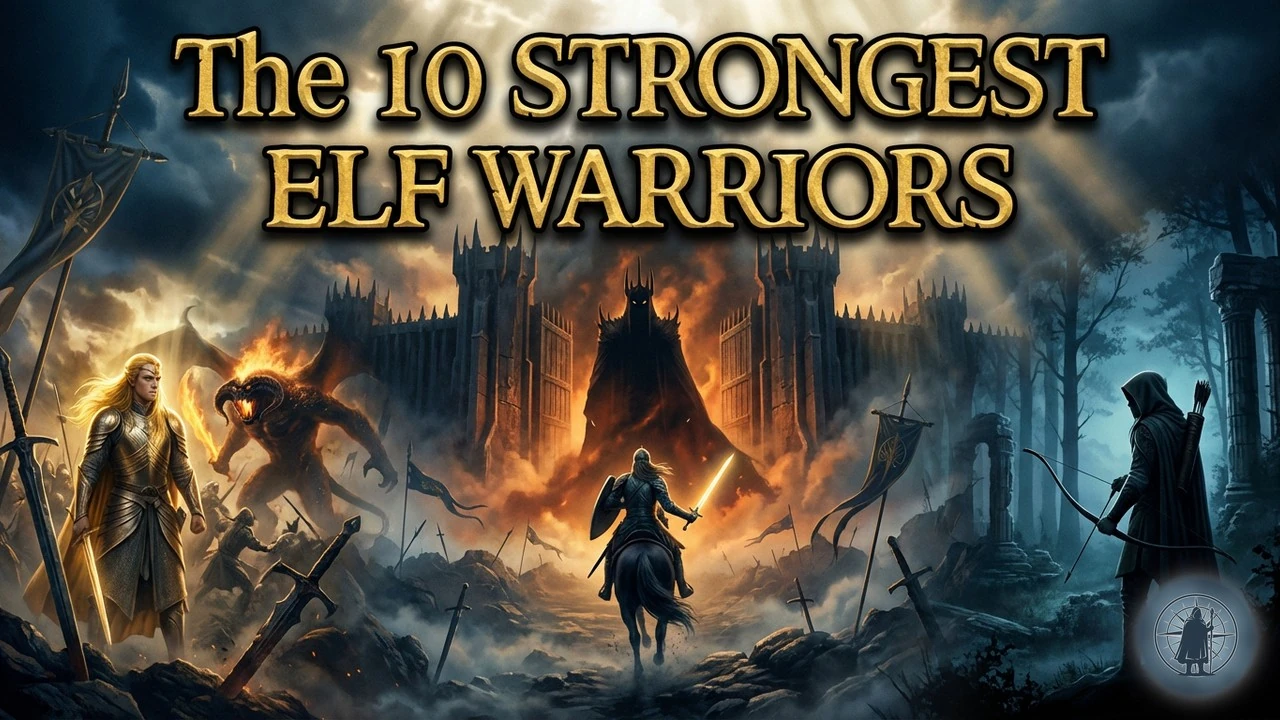 Watch the episode
Strongest Elf Warriors Ranked: Fingolfin to Legolas | Tolkien Lore
Watch the episode
Strongest Elf Warriors Ranked: Fingolfin to Legolas | Tolkien Lore
Research Notes: The 10 Strongest Elf Warriors Ever
Overview
Across the Ages of Middle-earth, Tolkien created a rich tapestry of Elven warriors whose feats range from single combat against the Dark Lords themselves to desperate last stands against Balrogs. This episode ranks and analyzes the ten greatest Elf warriors, drawing primarily from The Silmarillion, Unfinished Tales, The Lord of the Rings, the History of Middle-earth series, and Tolkien's Letters. The question of who is the "strongest" demands careful consideration: raw power, combat feats, tactical brilliance, spiritual fortitude, and lasting impact all factor into the ranking. Notably, the overwhelming majority of the greatest Elf warriors belong to the First Age, when the Eldar were closer to the Light of Valinor and had not yet diminished through the Marring of Arda.
Primary Sources
The Silmarillion
Feanor -- "For Feanor was made the mightiest in all parts of body and mind: in valour, in endurance, in beauty, in understanding, in skill, in strength and subtlety alike: of all the Children of Iluvatar, and a bright flame was in him." (Of Feanor and the Unchaining of Melkor)
Fingolfin vs. Morgoth -- Fingolfin rode alone to the gates of Angband after the Dagor Bragollach: "he sounded his horn, and smote once more upon the brazen gates, and challenged Morgoth to come forth to single combat." He wounded Morgoth seven times with his sword Ringil. "Thrice was Fingolfin with great blows to his knees beaten, and thrice he rose." Even as Morgoth set his foot upon him, Fingolfin stabbed the Dark Lord's foot with a final blow that caused Morgoth to limp forever after. "Thus died Fingolfin, High King of the Noldor, most proud and valiant of the Elven-kings of old." (Of the Ruin of Beleriand and the Fall of Fingolfin)
Feanor's death -- After being mortally wounded by Gothmog and multiple Balrogs at the Dagor-nuin-Giliath: "Then he died; but he had neither burial nor tomb, for so fiery was his spirit that as it sped his body fell to ash, and was borne away like smoke; and his likeness has never again appeared in Arda, neither has his spirit left the halls of Mandos." (Of the Return of the Noldor)
Fingolfin's characterization -- "Fingolfin was the strongest, the most steadfast, and the most valiant" of the sons of Finwe. (Of Feanor and the Unchaining of Melkor)
Maedhros in battle -- "Maedhros did deeds of surpassing valour, and the Orcs fled before his face; for since his torment upon Thangorodrim his spirit burned like a white fire within, and he was as one that returns from the dead." (Of the Ruin of Beleriand)
Ecthelion vs. Gothmog -- Ecthelion of the Fountain slew Gothmog, Lord of Balrogs, at the Fall of Gondolin. Having lost his sword, he drove the spike of his helmet into Gothmog's body, and they both fell into the Fountain of the King, where both drowned. In early versions, Ecthelion killed three Balrogs before this final encounter.
Glorfindel's Balrog duel -- During the Fall of Gondolin, Glorfindel fought a Balrog upon a pinnacle of rock to protect fleeing refugees. Both fell into the abyss and were slain.
Fingon's feats -- Fingon the Valiant rescued Maedhros from Thangorodrim with the aid of Thorondor. He drove back the young dragon Glaurung in the Dagor Aglareb. He fell at the Nirnaeth Arnoediad, slain by Gothmog, Lord of Balrogs, after being bound by another Balrog's whip.
Gil-galad and Aeglos -- "Against Aeglos the spear of Gil-galad none could stand." Gil-galad and Elendil fought Sauron hand-to-hand in the War of the Last Alliance, both dying in the final combat but casting Sauron down.
Beleg Cuthalion -- The greatest archer among the Elves, chief march-warden of Doriath. His bow Belthronding was of black yew and could be wielded by none but him. His arrow Dailir never missed its mark. He hunted the great wolf Carcharoth alongside Thingol, Beren, and Huan. With Turin, he created the "Land of Bow and Helm," a territory so well-defended that Morgoth's forces fled the region.
The Lord of the Rings
Glorfindel in the Third Age -- After reincarnation and return, Glorfindel confronted the Nazgul at the Ford of Bruinen. He could stand against the Witch-king and hold his own against the Ringwraiths. Gandalf noted that there were few in Rivendell who could ride openly against the Nine.
Legolas -- Described as "tall as a young tree, lithe, immensely strong, able swiftly to draw a great war-bow and shoot down a Nazgul." At Helm's Deep, Legolas killed 41 Orcs (20 with bow, 21 with long-knife). Shot down the fell beast carrying a Nazgul in the dark over the Anduin.
Unfinished Tales
Galadriel's martial nature -- Galadriel possessed "the keen eye of a commander" and "looked upon the Dwarves also with the eye of a commander, seeing in them the finest warriors to pit against the Orcs."
Glorfindel's enhanced power -- After re-embodiment and dwelling in Valinor, Glorfindel's spiritual power was greatly enhanced, "almost an equal of the Maiar." Sent back by Manwe as an emissary of the Valar, on a mission similar to the Istari.
Letters of J.R.R. Tolkien
Galadriel as Amazon -- In Letter 348, Tolkien wrote that Galadriel "was then of Amazon disposition and bound up her hair as a crown when taking part in athletic feats."
Feanor's supremacy -- Tolkien described Feanor as having surpassed all other Children of Iluvatar in every capacity of body and mind.
The History of Middle-earth / Peoples of Middle-earth
Glorfindel's reincarnation -- Tolkien worked out that the Glorfindel of Gondolin and the Glorfindel of Rivendell were the same person, reincarnated and sent back in the Second Age (circa S.A. 1600) with greatly enhanced powers.
Gil-galad's parentage -- Originally conceived as a son of Fingon (published Silmarillion), Tolkien's final revision made him the son of Orodreth (grandson of Angrod, great-grandson of Finarfin). Christopher Tolkien later acknowledged this late revision but kept the Fingon parentage in the published text.
Ecthelion's expanded feats -- In the earliest version of the Fall of Gondolin (Book of Lost Tales), Ecthelion slays three Balrogs before his final duel with Gothmog, and his voice in battle became "a terror among the enemy and a war-cry to the Eldar."
Key Facts & Timeline
- Years of the Trees: Feanor creates the Silmarils; the Noldor dwell in Valinor under the light of the Two Trees, growing mighty - F.A. 1: The Noldor return to Middle-earth; Feanor fights and dies at the Dagor-nuin-Giliath (Battle-under-Stars) - F.A. ~5: Fingon rescues Maedhros from Thangorodrim with aid of Thorondor - F.A. 60: Dagor Aglareb -- Fingon drives back young Glaurung - F.A. 455: Dagor Bragollach -- Fingolfin rides alone to challenge Morgoth; dies in single combat. Maedhros holds Himring while other realms fall - F.A. 456: Fingon becomes High King of the Noldor - F.A. 472: Nirnaeth Arnoediad -- Fingon slain by Gothmog; the Union of Maedhros collapses - F.A. 510: Fall of Gondolin -- Ecthelion slays Gothmog; Glorfindel slays a Balrog; both die - F.A. 587: War of Wrath ends the First Age - S.A. ~1600: Glorfindel returns to Middle-earth as emissary of the Valar - S.A. 3441: Gil-galad and Elendil overthrow Sauron at the Last Alliance; both die - T.A. 3018: Glorfindel confronts the Nazgul at the Ford of Bruinen - T.A. 3019: Legolas fights at Helm's Deep, Pelennor Fields, and the Black Gate
Significant Characters (The Proposed Top 10)
1. Fingolfin
- Titles: High King of the Noldor - Lineage: Son of Finwe and Indis; half-brother of Feanor - Weapon: Ringil (a sword that glittered like ice) - Key feat: Single combat with Morgoth, wounding the Dark Lord seven times - Death: Crushed by Morgoth's foot, but wounded him with a final blow - Why #1: The only Elf (and one of only two non-Ainur) to wound Morgoth in single combat. Tolkien explicitly called him "most proud and valiant of the Elven-kings of old"2. Feanor
- Titles: Creator of the Silmarils, leader of the Noldorin exile - Lineage: Son of Finwe and Miriel - Key feat: Fought multiple Balrogs simultaneously; described as the mightiest of all Children of Iluvatar - Death: Body burned to ash from the intensity of his own departing spirit - Why #2: Tolkien explicitly states he was the mightiest in all capacities. Fought multiple Balrogs at once. His spirit was so intense it destroyed his own body upon death3. Glorfindel
- Titles: Lord of the House of the Golden Flower - Lineage: Noldorin Elf of Gondolin - Key feat: Slew a Balrog at the Fall of Gondolin; reincarnated with power nearly equal to the Maiar - Death: Fell with the Balrog into an abyss (later reincarnated) - Why #3: The only Elf warrior who was reincarnated and enhanced by the Valar. After return, his power approached that of the Maiar. Could stand against the Nazgul in the Third Age4. Ecthelion of the Fountain
- Titles: Lord of the People of the Fountain, Elf-lord of Gondolin - Lineage: Noldorin Elf of Gondolin - Key feat: Slew Gothmog, Lord of ALL Balrogs -- not just any Balrog, but their commander - Death: Drowned in the Fountain of the King along with Gothmog - Why #4: Killing Gothmog is arguably the single greatest feat of arms by any Elf in the legendarium. Gothmog had previously slain Feanor and would slay Fingon5. Fingon the Valiant
- Titles: High King of the Noldor (after Fingolfin) - Lineage: Son of Fingolfin - Weapon: Unnamed sword - Key feat: Rescued Maedhros from Thangorodrim; drove back Glaurung the dragon - Death: Slain by Gothmog at the Nirnaeth Arnoediad after being bound by another Balrog - Why #5: The epithet "the Valiant" was shared with the Vala Tulkas. His rescue of Maedhros was one of the boldest acts in the legendarium. Drove back the Father of Dragons6. Maedhros
- Titles: Lord of Himring, eldest son of Feanor - Lineage: Son of Feanor - Key feat: After losing his right hand to Morgoth's chains, became even deadlier fighting left-handed. Held Himring when all other Noldorin realms fell - Death: Cast himself into a chasm of fire with a Silmaril at the end of the First Age - Why #6: His resilience is unmatched -- tortured on Thangorodrim, lost his hand, yet became an even greater warrior. His spirit "burned like a white fire within." Organized the Union of Maedhros, the greatest military alliance of the First Age7. Gil-galad
- Titles: Last High King of the Noldor in Middle-earth, King of Lindon - Lineage: Son of Fingon (published) or Orodreth (Tolkien's later revision) - Weapon: Aeglos (a spear; "none could withstand" it) - Key feat: Fought Sauron hand-to-hand in the War of the Last Alliance alongside Elendil - Death: Killed by Sauron through the burning heat of his hands - Why #7: Fought and helped cast down a Dark Lord (Sauron). Last Elven king to lead a major military campaign. His spear Aeglos was one of the most feared weapons in Middle-earth8. Beleg Cuthalion (Beleg Strongbow)
- Titles: Chief March-warden of Doriath - Lineage: Sindarin Elf of Doriath - Weapons: Belthronding (bow of black yew), Dailir (an unerring arrow), later Anglachel (meteor-iron sword) - Key feat: Greatest archer of the First Age. With Turin, created the "Land of Bow and Helm" that pushed Morgoth's forces back. Hunted Carcharoth alongside Thingol, Beren, and Huan - Death: Accidentally slain by Turin while rescuing him from Orcs - Why #8: Represents a different kind of warrior excellence -- the master archer and ranger. His prowess with Belthronding was unmatched. He is the Sindar's greatest warrior, proving Light-of-Valinor was not the only source of martial prowess9. Galadriel
- Titles: Lady of Lothlorien, Lady of Light - Lineage: Daughter of Finarfin, granddaughter of Finwe and Indis; bore the name Nerwen ("man-maiden") - Key feat: Fought against Feanor in defense of the Teleri at the First Kinslaying at Alqualonde. Tolkien described her as of "Amazon disposition." She was "strong of body, mind, and will, a match for both the loremasters and the athletes of the Eldar" - Death: Sailed to Valinor at the end of the Third Age - Why #9: The longest-surviving warrior from the First Age to remain active in Middle-earth. Fought at Alqualonde, led in the crossing of the Helcaraxe, defended against Sauron's forces. Her mother-name Nerwen ("man-maiden") speaks to her martial nature. Unique as one of the few female Elf warriors10. Legolas
- Titles: Prince of the Woodland Realm - Lineage: Son of Thranduil, Sindarin/Silvan Elf - Weapons: Great war-bow, long knife - Key feat: Shot down a Nazgul's fell beast in the dark. Fought at Helm's Deep (41 kills), Pelennor Fields, and the Black Gate. Endured the entire War of the Ring - Death: Sailed to Valinor with Gimli after Aragorn's death - Why #10: While lacking the titanic First Age feats, Legolas is the greatest Elf warrior of the Third Age actually depicted in sustained combat. Tolkien described him as possessing "the tremendous vitality of Elvish bodies." He represents the diminished but still formidable martial tradition of the EldarHonorable Mentions
- Thingol (Elu Thingol): Tallest of all Children of Iluvatar. Awoke at Cuivienen. Led the First Battle of Beleriand. Hunted Carcharoth. But his martial feats are more limited than others on the list. - Celegorm: Learned from Orome the Huntsman. Renowned cavalry leader. Died at the Second Kinslaying. - Elrond: Herald of Gil-galad, present at the Last Alliance. More of a loremaster and healer than a frontline warrior. - Turgon: King of Gondolin, killed defending his city. A leader rather than a standout individual combatant. - Curufin: Most like Feanor in appearance and temperament. Skilled fighter but morally compromised.
Geography
- Angband: Morgoth's fortress in the north of Beleriand, site of Fingolfin's challenge - Thangorodrim: The three volcanic peaks above Angband where Maedhros was chained - Gondolin: Hidden city of Turgon, site of Ecthelion and Glorfindel's final battles - Doriath: Thingol's realm, protected by the Girdle of Melian; home of Beleg Cuthalion - Himring: Maedhros's fortress, the only Noldorin realm to survive the Dagor Bragollach - Barad-dur / Mount Doom: Site of Gil-galad and Elendil's final battle with Sauron - Ford of Bruinen: Where Glorfindel confronted the Nazgul in the Third Age - Helm's Deep / Pelennor Fields: Legolas's major Third Age battle sites - Lammoth: Where Feanor first landed and fought the Dagor-nuin-Giliath
Themes and Symbolism
Light and Power
The Calaquendi (Elves of Light) who beheld the Two Trees possessed greater spiritual and physical power than the Moriquendi (Dark Elves). This is why the list is dominated by Noldorin Elves -- they carried the light of Valinor within them. Beleg stands as the notable exception, a Sindarin Elf who rivaled any Noldo in combat.Sacrifice and Heroic Death
Nearly every warrior on this list died in heroic combat. Tolkien's warrior ethic is deeply rooted in Northern European heroism -- the courage to fight against impossible odds knowing defeat is inevitable. Fingolfin's charge against Morgoth is the supreme example.Named Weapons as Extensions of Identity
Ringil, Aeglos, Belthronding, Anglachel -- these weapons are not merely tools but carry identity, history, and sometimes their own will. The naming of weapons reflects the Norse and Anglo-Saxon traditions Tolkien drew from.Diminishing Through the Ages
The progression from Fingolfin's duel with a Vala to Legolas's kill count at Helm's Deep illustrates the long decline of Elvish martial power across the Ages. Each generation is further from the Light of Valinor.The Balrog-Slayer Tradition
Three of the top four warriors (Feanor, Glorfindel, Ecthelion) are defined by combat with Balrogs. These encounters represent the supreme test of Elvish martial prowess -- fighting corrupted Maiar. Each such combat required the ultimate sacrifice.Tragic Heroism vs. Strategic Heroism
Some warriors (Fingolfin, Ecthelion) are defined by glorious last stands. Others (Maedhros, Gil-galad) are defined by sustained campaigns and leadership. The tension between these modes of heroism runs throughout the legendarium.Scholarly Perspectives
The "Greatest Elf" Debate
Scholars and fans have long debated whether Feanor or Fingolfin deserves the title of greatest Elf warrior. The distinction often comes down to the difference between innate capability (Feanor, explicitly called "mightiest in all parts of body and mind") versus demonstrated martial achievement (Fingolfin, who wounded Morgoth himself). Some argue Feanor's early death prevented him from achieving his full potential on the battlefield.The Reincarnation Question
Tolkien's decision to make First Age Glorfindel and Third Age Glorfindel the same character has been analyzed by scholars as a significant development in his theology of Elvish reincarnation. The enhancement of Glorfindel's power upon return raises questions about the relationship between sacrifice, death, and spiritual growth in Tolkien's framework.Power Levels and the Marring of Arda
The concept of diminishing Elvish power across the Ages connects to Tolkien's theological framework of the Marring of Arda. As Morgoth's corruption spread through the physical substance of the world, all beings -- especially Elves -- lost something of their original potency. This is why First Age warriors dwarf their later counterparts.Gender and Martial Power
Galadriel's inclusion raises interesting scholarly questions. Tolkien's late writings increasingly emphasized her physical and martial capabilities, though she never receives a major combat scene in the published narratives. The tension between her described abilities and her narrative role has been widely discussed.The Calaquendi Advantage
Scholars note that the Light of Valinor functions almost as a power-scaling mechanism. Elves who beheld the Two Trees (Calaquendi) consistently outperform those who did not (Moriquendi). Beleg Cuthalion is the great exception, suggesting that individual excellence can sometimes transcend the cosmic hierarchy.Contradictions and Variants
Ecthelion's Kill Count
In the earliest version of the Fall of Gondolin (Book of Lost Tales II), Ecthelion slays three Balrogs before his final combat with Gothmog. In later versions and the published Silmarillion, only the Gothmog duel is mentioned. This reflects Tolkien's later decision to reduce the number of Balrogs from hundreds to "at most seven."Gil-galad's Parentage
The published Silmarillion makes Gil-galad the son of Fingon. Tolkien's final revision (noted in The Peoples of Middle-earth) makes him the son of Orodreth. Christopher Tolkien later expressed regret about not leaving the parentage ambiguous.Glorfindel: One or Two?
For decades, the question of whether Glorfindel of Gondolin and Glorfindel of Rivendell were the same character was unresolved. Tolkien's late essays confirmed they were the same, with the character having been reincarnated and sent back. Some scholars note the different versions of when he returned (with the Blue Wizards, or earlier).Feanor vs. Fingolfin: Textual Tension
Tolkien calls Feanor "mightiest in all parts of body and mind" but also calls Fingolfin "the strongest, the most steadfast, and the most valiant." These descriptions create a deliberate tension -- Feanor's "might" encompasses all capacities (craft, intellect, spirit), while Fingolfin's "strength" and "valiance" specifically relate to martial and moral qualities.Balrog Numbers
Early texts featured armies of Balrogs. Tolkien's later writings reduced them to a small number (around seven). This affects how we assess Feanor fighting "multiple Balrogs" -- in the later conception, even fighting two or three Balrogs simultaneously would be an extraordinary feat.Linguistic Notes
- Fingolfin: Sindarin form; Quenya name Nolofinwe ("wise Finwe") - Feanor: Sindarin form of Quenya Feanaro, "Spirit of Fire" -- prophetically appropriate given his death - Glorfindel: "Golden-haired" (Sindarin: glor- "golden" + findel "hair") - Ecthelion: Possibly from Sindarin ecthel- "thorn, spike, point" -- fitting given his helmet-spike kill - Ringil: Fingolfin's sword; related to "ring" meaning "cold" in Sindarin - Aeglos: "Snow Point" or "Icicle" -- Gil-galad's spear - Belthronding: Beleg's bow; "sturdy bow" in Sindarin - Cuthalion: "Strongbow" (cuth- "bow" + thalion "strong/steadfast") - Nerwen: Galadriel's mother-name, meaning "man-maiden" - Maedhros: Sindarin form; his Quenya name was Maitimo ("well-shaped one") and epesse Russandol ("copper-top")
Compelling Quotes for Narration
1. "For Feanor was made the mightiest in all parts of body and mind: in valour, in endurance, in beauty, in understanding, in skill, in strength and subtlety alike: of all the Children of Iluvatar." -- The Silmarillion 2. "Thus died Fingolfin, High King of the Noldor, most proud and valiant of the Elven-kings of old." -- The Silmarillion 3. "Maedhros did deeds of surpassing valour, and the Orcs fled before his face; for since his torment upon Thangorodrim his spirit burned like a white fire within, and he was as one that returns from the dead." -- The Silmarillion 4. "Against Aeglos the spear of Gil-galad none could stand." -- The Silmarillion 5. "Come, open wide, dark king, your ghastly brazen doors! Come forth, whom earth and heaven abhors!" -- Lay of Leithian (Fingolfin's challenge) 6. "Tall as a young tree, lithe, immensely strong, able swiftly to draw a great war-bow and shoot down a Nazgul, endowed with the tremendous vitality of Elvish bodies." -- Tolkien describing Legolas 7. "So fiery was his spirit that as it sped his body fell to ash, and was borne away like smoke." -- The Silmarillion (Feanor's death)
Visual Elements to Highlight
1. Fingolfin riding alone across Dor-nu-Fauglith, "and those that saw his passing fled in amaze, thinking that Orome himself was come" -- a lone figure blazing with wrath against a desolate landscape 2. Feanor fighting multiple Balrogs simultaneously, consumed by flame and fury 3. Ecthelion driving his spiked helmet into Gothmog as they topple into the fountain -- water and flame colliding 4. Glorfindel and the Balrog grappling on a mountain pinnacle, silhouetted against the sky, both falling 5. Maedhros fighting one-handed, his spirit burning "like white fire within" -- a broken figure made more dangerous 6. Gil-galad facing Sauron with Aeglos, the spear gleaming like ice against Sauron's dark fire 7. Beleg with Belthronding, the archer in the deep forest, arrows never missing 8. Fingon cutting Maedhros free from the cliff face of Thangorodrim, Thorondor swooping 9. Legolas shooting down the fell beast in darkness over the Anduin 10. Galadriel at Alqualonde, fighting against Feanor's forces -- the only scene where she is depicted in physical combat
Questions and Mysteries
- Would Feanor have matched Fingolfin's feat against Morgoth if he had survived longer? His "mightiest in all parts" description suggests possibly, but his recklessness got him killed early. - How powerful was Glorfindel after reincarnation compared to Gandalf? Tolkien says "almost equal to the Maiar" -- does that make Third Age Glorfindel the most powerful Elf alive? - Why did Tolkien not give Galadriel a major combat scene despite describing her martial qualities? - How do we rank Beleg against the Noldor when he never saw the Light of Valinor but still matched their prowess? - Did Ecthelion or Glorfindel fight better at Gondolin? Ecthelion killed the Lord of Balrogs; Glorfindel saved the refugees. - What would the ranking look like if we included half-Elven warriors like Turin (raised by Elves but mortal)?
Discrete Analytical Themes
Theme 1: The Cosmic Hierarchy of Elvish Power
Core idea: The Light of Valinor creates a measurable hierarchy of martial capability -- Calaquendi warriors consistently outperform Moriquendi, and First Age Elves dwarf their later counterparts. Evidence: - Nearly all top warriors are Noldorin Calaquendi who beheld the Two Trees - Tolkien describes the Elven hroa (body) as being stronger when closer to Valinor's light - The fading of Elves in Middle-earth progressively reduced their martial capabilities - Glorfindel's power was re-enhanced specifically by dwelling again in Valinor after reincarnation - Beleg Cuthalion is the notable exception, a Sindarin warrior of supreme skill Distinction: This theme is about the STRUCTURAL FRAMEWORK that determines power levels, not about individual feats or character traitsTheme 2: The Supreme Test -- Elves Against Dark Lords and Maiar
Core idea: The ultimate measure of an Elf warrior is combat against beings of divine origin -- Morgoth, Sauron, or Balrogs (corrupted Maiar). Evidence: - Fingolfin: single combat with Morgoth, wounded him seven times - Feanor: fought multiple Balrogs simultaneously before falling - Ecthelion: slew Gothmog, Lord of all Balrogs - Glorfindel: killed a Balrog in single combat, dying in the process - Gil-galad: fought Sauron hand-to-hand alongside Elendil - Fingon: engaged Gothmog at the Nirnaeth Arnoediad Distinction: This theme is specifically about COMBAT AGAINST DIVINE BEINGS as the ultimate benchmark, not about the warriors' other feats or qualitiesTheme 3: Named Weapons as Power Multipliers and Identity Markers
Core idea: The great Elf warriors are inseparable from their legendary weapons, which carry their own identity, history, and sometimes will -- reflecting Tolkien's Norse and Anglo-Saxon literary influences. Evidence: - Ringil: Fingolfin's sword that "glittered like ice" and wounded Morgoth - Aeglos: "none could withstand" Gil-galad's spear - Belthronding: Beleg's black yew bow that only he could draw, plus the unerring arrow Dailir - Anglachel/Gurthang: the meteor-iron sword that carried its maker's malice - Ecthelion's spiked helmet became his weapon when his sword was lost -- improvised identity - The naming tradition mirrors Beowulf, the Eddas, and real Anglo-Saxon culture Distinction: This theme focuses on WEAPONS AND MATERIAL CULTURE as an element of warrior identity, separate from the warriors' personal qualities or combat recordTheme 4: Sacrifice as the Price of Greatness
Core idea: Almost every supreme Elf warrior dies in the act that defines their greatness -- Tolkien's warrior ethic demands that the ultimate feat requires the ultimate cost. Evidence: - Fingolfin dies at Morgoth's feet after his greatest achievement - Ecthelion drowns in the fountain alongside Gothmog - Glorfindel falls into the abyss with the Balrog - Feanor's spirit is so intense it destroys his own body upon death - Fingon dies fighting Gothmog after a heroic stand - Gil-galad is killed by Sauron's burning hands - Only Glorfindel is returned -- and only because the Valar specifically intervene Distinction: This theme is about the PATTERN OF DEATH as a narrative and theological principle, not about the specific combat feats themselvesTheme 5: Resilience and the Broken Warrior
Core idea: Some of the greatest Elf warriors achieve their highest feats not from a position of strength but from brokenness -- torture, loss, despair -- becoming more dangerous through suffering. Evidence: - Maedhros: tortured on Thangorodrim, lost his hand, then fought even better left-handed; "his spirit burned like a white fire within, and he was as one that returns from the dead" - Fingolfin: rode to challenge Morgoth not from hope but from despair after the Dagor Bragollach - Beleg: continued pursuing Turin despite being dismissed, attacked, and repeatedly endangered - Feanor: his death was caused by the same reckless intensity that made him the mightiest Distinction: This theme focuses on PSYCHOLOGICAL TRANSFORMATION through suffering, distinct from the structural power hierarchy or the pattern of sacrificeTheme 6: The Diminishing of Martial Glory Across the Ages
Core idea: The progression from Fingolfin dueling Morgoth to Legolas counting kills at Helm's Deep tells the story of a fading race -- each Age produces smaller feats and less formidable warriors. Evidence: - First Age: Elves duel Valar and Maiar directly - Second Age: Gil-galad requires an alliance with Men to face Sauron (a lesser Dark Lord than Morgoth) - Third Age: Glorfindel (a reincarnated First Age warrior) is the most formidable Elf; native Third Age Elves like Legolas are impressive but operate on a smaller scale - Tolkien's concept of the Marring of Arda and Elvish fading explains this decline - The Elves' departure to Valinor accelerates as their power wanes Distinction: This theme traces the HISTORICAL TRAJECTORY of decline, while Theme 1 explains the structural reasons behind itTheme 7: Different Modes of Warrior Excellence
Core idea: Tolkien presents multiple archetypes of Elf warrior -- the champion duelist, the archer-ranger, the military commander, the Amazon -- resisting a single definition of martial greatness. Evidence: - Fingolfin: the champion duelist who seeks single combat with the enemy lord - Beleg: the archer-ranger who dominates through skill, stealth, and marksmanship - Maedhros: the strategic commander who organizes alliances and holds fortresses - Galadriel: the warrior-leader whose martial qualities are recognized but rarely depicted in combat - Ecthelion: the improvising fighter who adapts when his sword is lost - Gil-galad: the spear-wielding king who leads from the front - Legolas: the mobile, enduring combatant who fights across multiple campaigns Distinction: This theme categorizes the TYPES OF WARRIORS represented, distinct from their power levels or specific featsSources Consulted: The 10 Strongest Elf Warriors Ever
Primary Tolkien Sources
Books Referenced
1. The Silmarillion (J.R.R. Tolkien, ed. Christopher Tolkien, 1977) -- Primary source for First Age warriors, battles, and character descriptions. Chapters heavily used: - "Of Feanor and the Unchaining of Melkor" (Feanor's description) - "Of the Return of the Noldor" (Feanor's death, Dagor-nuin-Giliath) - "Of the Ruin of Beleriand and the Fall of Fingolfin" (Fingolfin vs. Morgoth, Maedhros in battle) - "Of the Fifth Battle: Nirnaeth Arnoediad" (Fingon's death, Maedhros's feats) - "Of Tuor and the Fall of Gondolin" (Ecthelion, Glorfindel) - "Of Beren and Luthien" (Beleg, Thingol, hunting of Carcharoth) - "Of Turin Turambar" (Beleg Cuthalion) - "Of the Rings of Power and the Third Age" (Gil-galad, Last Alliance)2. The Lord of the Rings (J.R.R. Tolkien, 1954-55) -- Glorfindel at the Ford of Bruinen, Legolas throughout, Gil-galad references - The Fellowship of the Ring: "Flight to the Ford," "The Council of Elrond" - The Two Towers: "Helm's Deep" - The Return of the King: "The Battle of the Pelennor Fields"
3. Unfinished Tales (J.R.R. Tolkien, ed. Christopher Tolkien, 1980) -- Glorfindel's reincarnation details, Galadriel's martial nature
4. The Letters of J.R.R. Tolkien (ed. Humphrey Carpenter, 1981) -- Letter 348 on Galadriel as "Amazon"; various letters on Elvish nature and power
5. The History of Middle-earth series (ed. Christopher Tolkien): - The Book of Lost Tales Part II (vol. 2) -- Earlier version of Fall of Gondolin with Ecthelion's expanded Balrog kills - The Peoples of Middle-earth (vol. 12) -- Glorfindel essay (reincarnation), Gil-galad parentage revision - Morgoth's Ring (vol. 10) -- Galadriel fighting at Alqualonde, Elvish nature and fading - The Lays of Beleriand (vol. 3) -- Lay of Leithian passages on Fingolfin's challenge
6. The Shibboleth of Feanor (in Peoples of Middle-earth) -- Galadriel's mother-name Nerwen, physical descriptions
Secondary Sources (Web)
Wikis and Reference Sites
7. Tolkien Gateway (tolkiengateway.net) -- Comprehensive wiki articles on all characters. Attempted but received 403 errors; information cross-referenced via search results. - Most useful for: chronological data, character lineages, battle details8. The One Wiki to Rule Them All / Fandom (lotr.fandom.com) -- Character profiles and battle descriptions - https://lotr.fandom.com/wiki/Fingolfin - https://lotr.fandom.com/wiki/F%C3%ABanor - https://lotr.fandom.com/wiki/Glorfindel - https://lotr.fandom.com/wiki/Ecthelion_(Elf_of_Gondolin) - https://lotr.fandom.com/wiki/Gil-galad - https://lotr.fandom.com/wiki/Beleg - https://lotr.fandom.com/wiki/Maedhros - https://lotr.fandom.com/wiki/Legolas - https://lotr.fandom.com/wiki/Galadriel - https://lotr.fandom.com/wiki/Elrond
Scholarly and Analysis Sites
9. Silmarillion Writers' Guild (silmarillionwritersguild.org) -- Character biographies and scholarly analysis - https://www.silmarillionwritersguild.org/reference/characterofthemonth/fingolfin.php - https://www.silmarillionwritersguild.org/reference/characterofthemonth/ecthelion.php - https://www.silmarillionwritersguild.org/reference/characterofthemonth/glorfindel1.php - https://www.silmarillionwritersguild.org/reference/characterofthemonth/beleg.php - https://www.silmarillionwritersguild.org/reference/characterofthemonth/maedhros.php - Most useful for: detailed character analysis, textual references, scholarly perspectives10. Middle-earth & J.R.R. Tolkien Blog (middle-earth.xenite.org) -- Analytical articles - https://middle-earth.xenite.org/could-fingolfin-have-defeated-morgoth-in-mortal-combat/ - https://middle-earth.xenite.org/was-galadriel-a-warrior/
11. Reactor Magazine (reactormag.com) -- "Fey and Fury: When Noldor Attack!" and "Exploring the People of Middle-earth: Legolas, a Radical Warrior" - https://reactormag.com/fey-and-fury-when-noldor-attack/ - https://reactormag.com/exploring-the-people-of-middle-earth-legolas-a-radical-warrior/