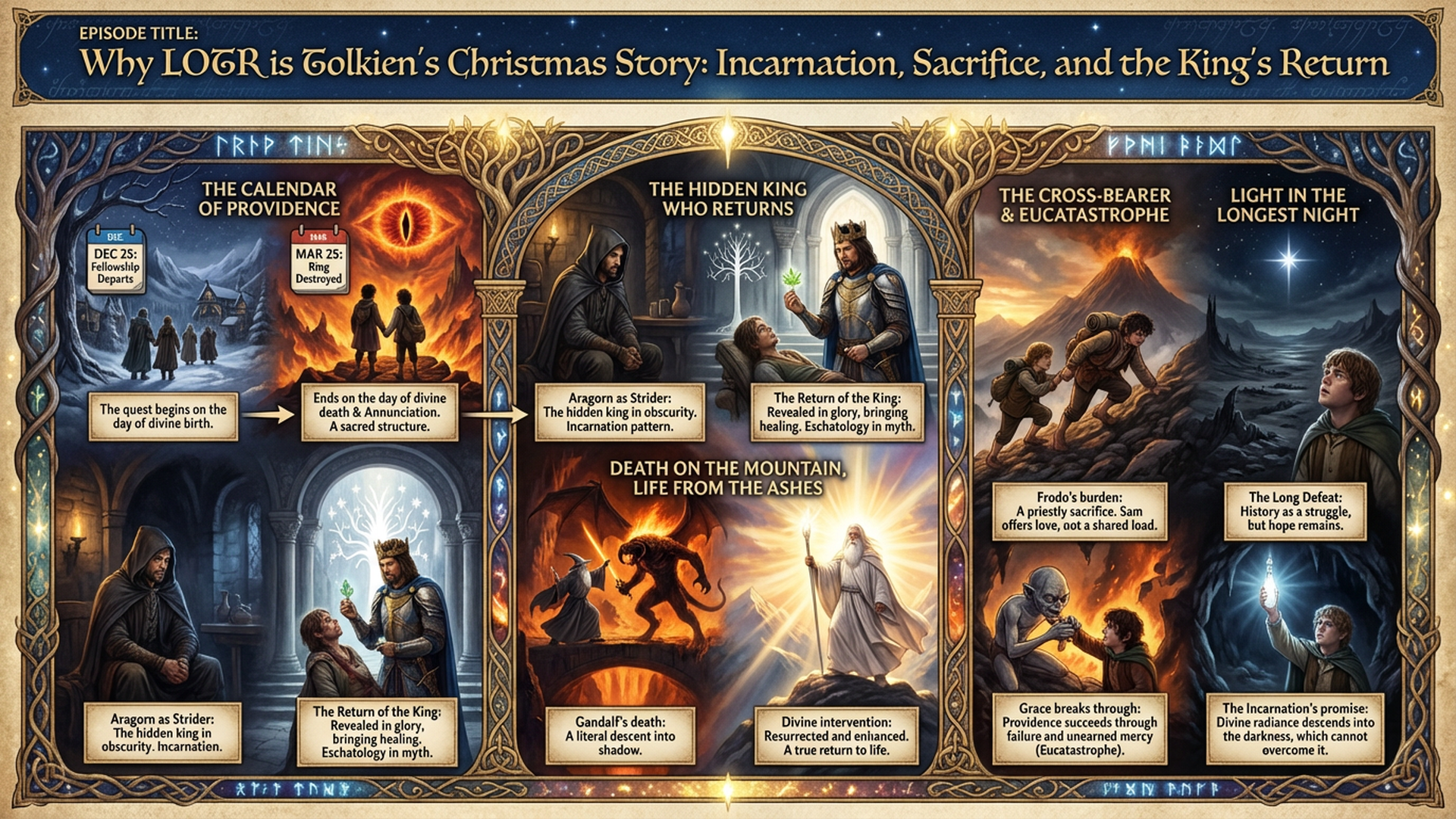
LOTR: Tolkien's Hidden Christmas Story | Incarnation & Sacrifice
The Lord of the Rings embodies the deepest structure of the Christmas story without explicit Christian content. Tolkien deliberately chose December 25 for the Fellowship's departure from Rivendell and March 25—the Feast of the Annunciation and traditional date of the Crucifixion—for the Ring's destruction. Aragorn mirrors Christ's incarnation pattern: the hidden king serving in humility before returning in glory, revealing himself through healing. Gandalf embodies death and resurrection, literally dying for nineteen days and being resurrected by Eru Ilúvatar himself, returning as Gandalf the White. Frodo's journey from December 25 to March 25 parallels Christ's path from birth to Golgotha, bearing the Ring like a cross—the accumulated sin and corruption of Middle-earth. At Mount Doom, Frodo fails and claims the Ring, yet grace succeeds through Gollum's intervention, demonstrating salvation through unmerited mercy rather than heroic sufficiency. This is eucatastrophe—Tolkien's term for the sudden joyous turn that mirrors the Gospel itself. Throughout, light persists in darkness: Sam's vision of Eärendil's star in Mordor, the Phial blazing in Shelob's lair, hope enduring through the long defeat. Tolkien absorbed the religious element into story and symbolism, creating a Christmas narrative that celebrates incarnation, sacrifice, and the return of the king.